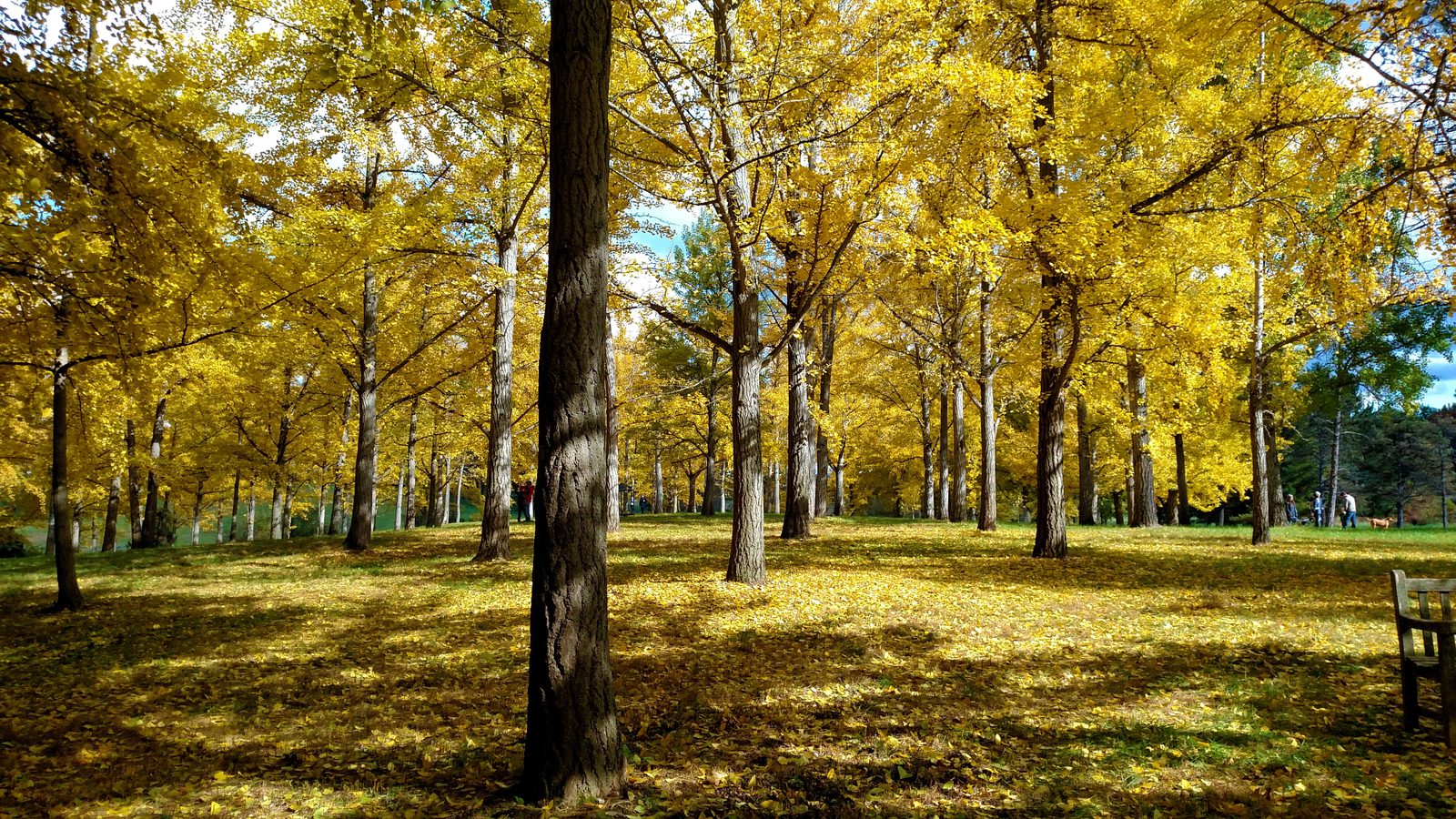
Graham F. Blandy died in 1926 and his will left 712 acres of the Tuleyries property — not including the mansion house and adjacent lands — to the University of Virginia. It was to be called the Blandy Experimental Farm, with the goal, in the will's own phrasing, to "teach boys how to farm." The University took possession the same year. Horace J. Martin had been farm manager of Tuleyries during the first two decades of Blandy's ownership1. One of the surviving pre-Blandy structures on the property, still standing as the Education Building, was originally an apple packing shed "believed" to have been built around 1900, its construction "likely" coinciding with the maturity of the Tuleyries orchards and the harvesting and shipping of apples2.
The first full season was 1927. Orland E. White, the first director, walked onto weed-filled fields and scattered old orchards. Harry Antrim, the farm manager, was placed in charge of the property's commercial enterprises. White's arithmetic for the year was blunt: it took $8,000 to run Blandy, and the apple crop brought in $4,0001. By the late 1930s the old orchards around the Quarters building were gradually removed as the Arboretum's own planting expanded; Harry Antrim died in 1931 and was replaced as farm manager by his son Robert2.
The commercial-farming era ended fifty years after the University took possession. In 1976 Blandy decided to abandon farming for profit altogether, leased approximately 500 acres to Edward B. Lee Sr., a local farmer, and set aside approximately 80 acres for the use of Fairfax Community College students1. The transition from farm to arboretum was already underway, and it was formalized ten years later: in 1986, the year after Edward F. Connor became director, Blandy Experimental Farm was designated the State Arboretum of Virginia2.
Six claims across ninety years. The will's phrase 'teach boys how to farm' names an intent the farm outgrew twice: first when its arithmetic couldn't support commercial farming, then when its mission became a state botanical collection instead. The Arboretum's own annual reports and the University's stewardship record would fill much of what the current collection does not.