Stories

Stories from Clarke County

Each one opens with what happened, and every statement in it shows the record underneath.

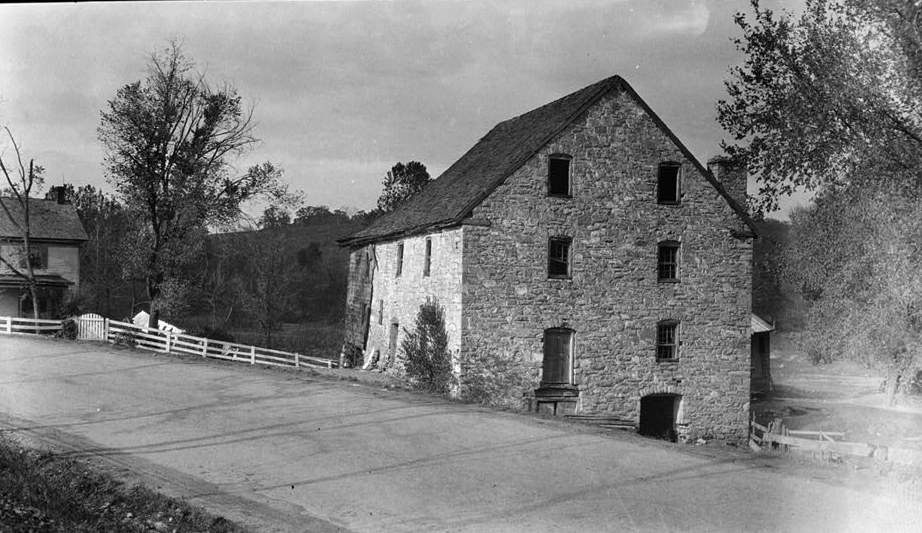
Black-and-white photograph of the Burwell Mill at Millwood, a tall stone building with a steep roof beside a curving road, a white fence and a frame house.
The Burwell Mill at Millwood, in a Historic American Buildings Survey photograph. Historic American Buildings Survey, HABS VA-354. Library of Congress, Prints & Photographs Division, HABS VA,22-MILWO,1-& 2-.

55 of 55 stories.

What used to be here✓ Supported

Three restaurants at 9 East Main Street

Three restaurant names appear in the records for 9 East Main Street. Archived listings capture the address on particular days; the opening and closing dates remain unknown.

What the evidence says Three listings documented, at dated captures. Openings and closings not established.

  • 2 min read
  • 9 sources
What used to be here✓ Supported

Winston Hall: a gathering place on East Main Street

Siz Daingerfield, a Black barkeeper, built a hall on East Main Street and named it for a singer. It hosted performances and community meetings; the Legion recalls the National Guard using its upstairs as an armory from 1922 to 1939. The bank bought the building in 1957 and demolished it in 1962.

What the evidence says Builder, uses and ending documented by two accounts. Building year disputed.

  • 2 min read
  • 2 sources
Working Clarke✓ Supported

Tomatoes under glass on Route 7.

In 1942 a six-year-old sold watermelons from a wagon at Route 7 and Chilly Hollow Road. He ran the stand that grew out of it for more than forty-five years, and told the story himself in 2013.

What the evidence says Wagon, stand and greenhouses documented from one attributed interview. Land history not established.

  • 2 min read
  • 2 sources
Working Clarke✓ Supported

Blandy: orchard, farm and arboretum

Upton Boyce planted apples on the Tuleyries land in the 1880s. Fifty years on, 712 of its acres belonged to the University of Virginia, which in 1976 stopped farming them for profit without stopping the farming.

What the evidence says Orchard growth, the 1926 bequest, the 1927 season, and the 1976 change documented from one article, read as indexed text.

  • 3 min read
  • 1 source
What used to be here✓ Supported

Hawthorne Hall: a house with many uses

A tavern, a doctor's office, a children's clinic, a dress shop and the county's only public library, in one brick house at Main and Buckmarsh.

What the evidence says Building documented by the 1987 survey; uses reported by a 2017 account and, for 1931 to 1947, by the contemporary newspaper.

  • 2 min read
  • 7 sources
What used to be here✓ Supported

23 East Main Street: livery, town offices, gallery

A livery behind a Colonial Revival front, then police and town offices, then a craft gallery for nine years. Three sources describe the building and no two carry the same identifying detail.

What the evidence says Building documented by the survey; firehouse and municipal dates from the fire company, without a street number; gallery month certain, day disputed.

  • 2 min read
  • 11 sources
Civic life & gathering✓ Supported

Inside Blue Ridge Wildlife Center

Blue Ridge Wildlife Center treats about four thousand wild animals a year, free, on an easement outside Boyce. By its own account almost all of them were hurt by people.

What the evidence says Scale, care, education and location from six published articles and pages, with almost every figure originating from the organization itself.

  • 5 min read
  • 7 sources
Land, work & community✓ Supported

Everyday life in Josephine City

Between 1910 and 1927 the People's Journal, a Black newspaper published at Berryville, carried advertisements, church notices and personal items from Josephine City: a grocery, a boarding house, a lunch room, houses being enlarged and repaired, and a congregation meeting on fourth Sundays.

What the evidence says Advertisements and notices, faithfully carried. One account qualified by its own date.

  • 5 min read
  • 10 sources
How this place came to be✓ Supported

Before the county: two land offices and a line at the Opequon

A boundary nobody could locate produced two land offices with opposite instructions. What grew up behind them was a county with two halves, and a century later the people in the eastern half asked to be a county of their own.

What the evidence says A settlement history drawn from one historian, set beside the printed arguments of the people who asked for the county.

  • 9 min read
  • 4 sources
Land, work & community✓ Supported

Alec Cary: a killing on the turnpike

On a Wednesday night in September 1869 four people were walking the turnpike between Millwood and Berryville. The Clarke Courier named two of them. One of those two did not reach the end of the road. By the end of October the same paper had reported an indictment against the other, and an attempt to arrest him that failed.

What the evidence says Three inspected newspaper items in two issues. A killing reported, an indictment reported, an arrest attempt that failed, two people never named, and no trial or outcome in any of them.

  • 3 min read
  • 2 sources
What used to be here✓ Supported

Human remains found at Berryville's bank site in 1881

In the spring of 1881 workmen digging the foundation for the Bank of Clarke County's new building in Berryville came upon the bones of four or five people. The newspaper that reported it offered an explanation, and said plainly that its reason was that nobody knew. Later accounts kept the explanation and dropped the reason.

What the evidence says One inspected newspaper item, five OCR notices, and two later accounts that retell the first.

  • 3 min read
  • 8 sources
Land, work & community✓ Supported

Mary F. Lewis’s Civil War property claim

In 1864, according to her later claim, Union forces took horses, livestock and grain from Mary F. Lewis's farm near Boyce. The record follows her claim to a court valuation and an 1899 appropriation. Whether the money was paid has not been found.

What the evidence says Three federal records for the claim, the valuation and the appropriation; a family essay for the rest. No payment record.

  • 3 min read
  • 5 sources
Civic life & gathering? Unconfirmed

The Little brothers' 1873 killing and trials

In early July 1873, according to the Clarke Courier, two of the six Little brothers locked the dining-room door at their father's house and one of them shot a third. The record that follows is a newspaper record: two trials, an appeal, a witness who changed his account, and a pardon refused.

What the evidence says Nine newspaper issues: eight of the Clarke Courier across four years, and one Alexandria Daily State Journal carrying a Baltimore Sun special. Four were read on the page image. One court opinion was also read in full text, though not on a page image, and no other court record was examined.

  • 3 min read
  • 10 sources
Service & war? Unconfirmed

A reported reunion after Libby Prison

In March 1886 the Clarke Courier printed a small scene under the heading “An Old Acquaintance”: an old man in a hotel, a stranger off a train, and an unpaid board bill that turns out to be an escape from Libby Prison. It is a good story, and parts of it do not sit easily with the records.

What the evidence says Six sources. The 1886 Clarke Courier item that carries the whole anecdote was read on the page image. The other five bear only on whether its names and dates fit the record. No prison roster or muster record was consulted.

  • 3 min read
  • 6 sources
Land, work & community✓ Supported

The reported 1854 drowning near Parker's Landing

On a Sunday night in September 1854, six men drowned trying to cross the Shenandoah in a small boat. Two Richmond papers carried the news. Each listed the people the men were said to belong to or to have been hired from, and the lists do not agree. Neither gives the name of any of the six.

What the evidence says Two inspected newspaper items, printed in Richmond a day apart. Six deaths reported, the place given in one account only, two conflicting lists of owners and hirers, and no name for any of the six.

  • 3 min read
  • 2 sources
Working Clarke✓ Supported

Bellview and the Sprints

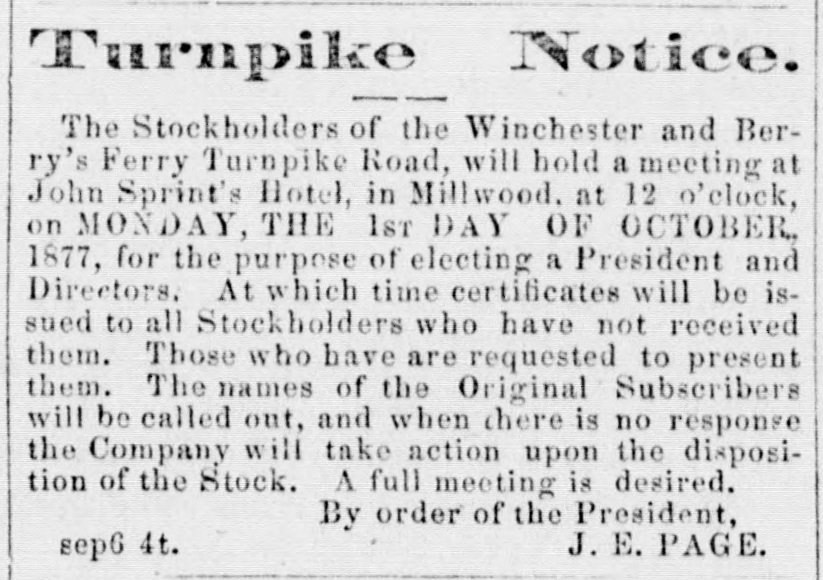
In 1877 a turnpike company called its stockholders to meet at John Sprint's Hotel in Millwood, and by 1882 J. W. Sprint & Son was advertising phosphates at Boyce. A will B. F. Humston signed in 1902 provided the Bellview farm to his daughter, Mamie R. Sprint, for life; it was admitted to record in 1904. Her son J. Ashby Sprint acquired orchard property, exported apples and leased land under a packing house at White Post. The records trace Mamie's family and Ashby's trade, while leaving the hotel's John Sprint and the firm's partners incompletely identified.

What the evidence says Humston's recorded will gives Mamie R. Sprint the Bellview farm for life. Courier notices place a Sprint packing house at Boyce and a leased packing-house site at White Post, but none names who ran the Boyce house, and the 1936 sale was advertised, not shown to be completed.

  • 5 min read
  • 21 sources
Working Clarke✓ Supported

The basket factory by the tracks

In 1921 a group of Berryville businessmen chartered a company to make fruit containers beside the Norfolk & Western tracks. The Clarke Courier followed it through a death on the log pile, a plant that turned gum logs into baskets for greens and apples, seasons of work and idleness, and its sale in 1938 to a New Jersey package man.

What the evidence says Courier reports of 1921, 1923, 1931, 1934, 1935 and 1938 document the company's charter and plans, a fatal accident at the plant, its production process, its seasonal restarts and its announced sale. They do not show which of the 1921 products were made, or what the plant became after 1938.

  • 5 min read
  • 6 sources
Land, work & community✓ Supported

The ground they kept: Milton Valley Cemetery

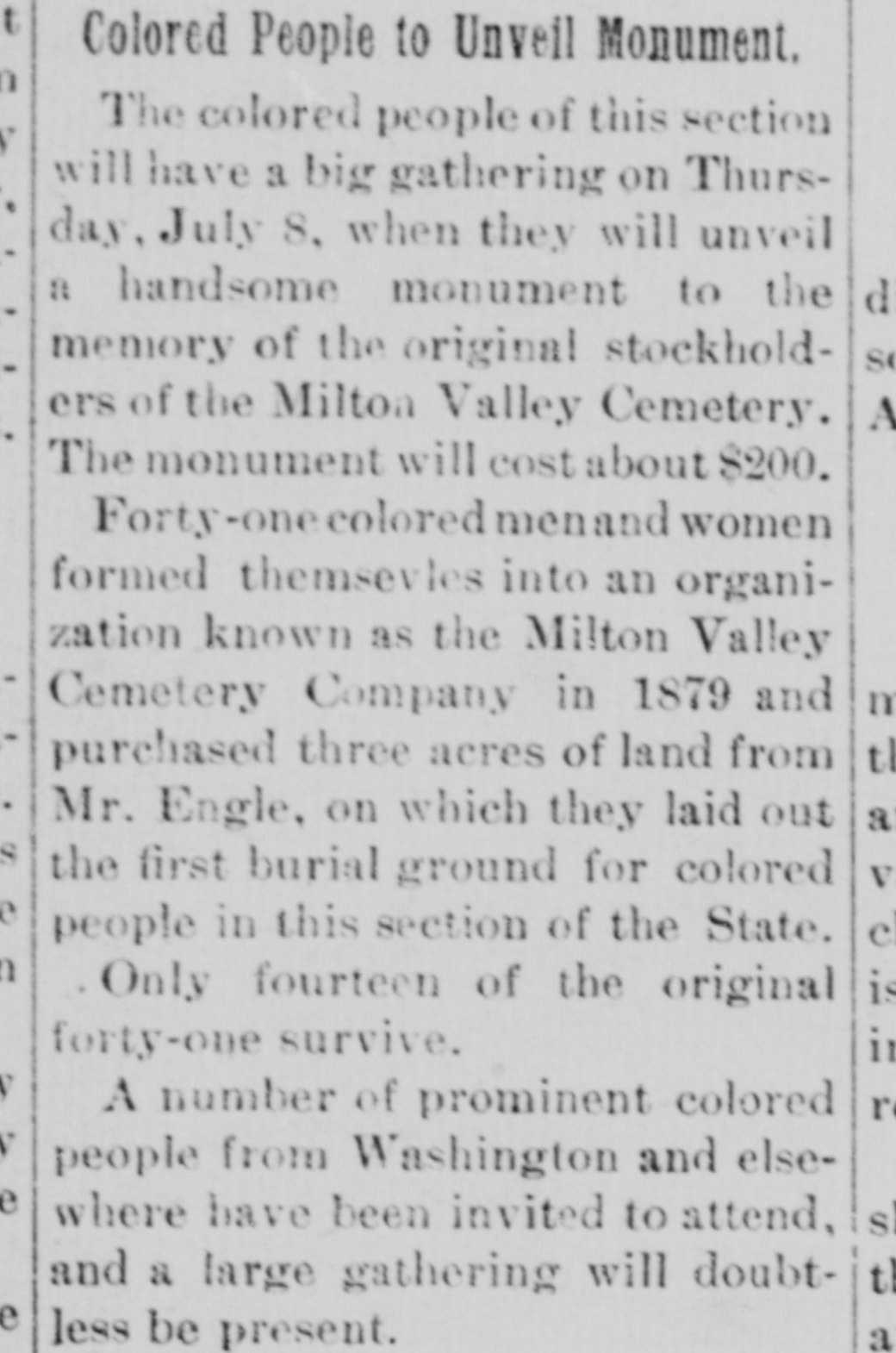
In 1909 the Clarke Courier credited forty-one Black men and women with forming the Milton Valley Cemetery Company in 1879 and buying three acres for a burial ground. A 1910 advertisement signed for the company, and a 1926 Cemetery Board notice printed under its heading, show lots offered, a monument raised and a yearly dollar asked of every lot holder, while a committee raised money for a walk in the cemetery. Funeral notices show the dead brought home from Cairo and Detroit, and by the 1930s the cemetery had its own Memorial Day exercises.

What the evidence says The 1909 Courier's account of forty-one founders in 1879, the company's 1910 advertisement and the 1926 board notice, read on the page images, show a Black-run cemetery company with stockholders, a monument and a yearly $1.00 charge on lot holders. Courier notices from 1897 to 1945 record burials there, including people brought home from Illinois and Detroit.

  • 7 min read
  • 17 sources
Civic life & gathering? Unconfirmed

Clarke County Training School: a dollar a year

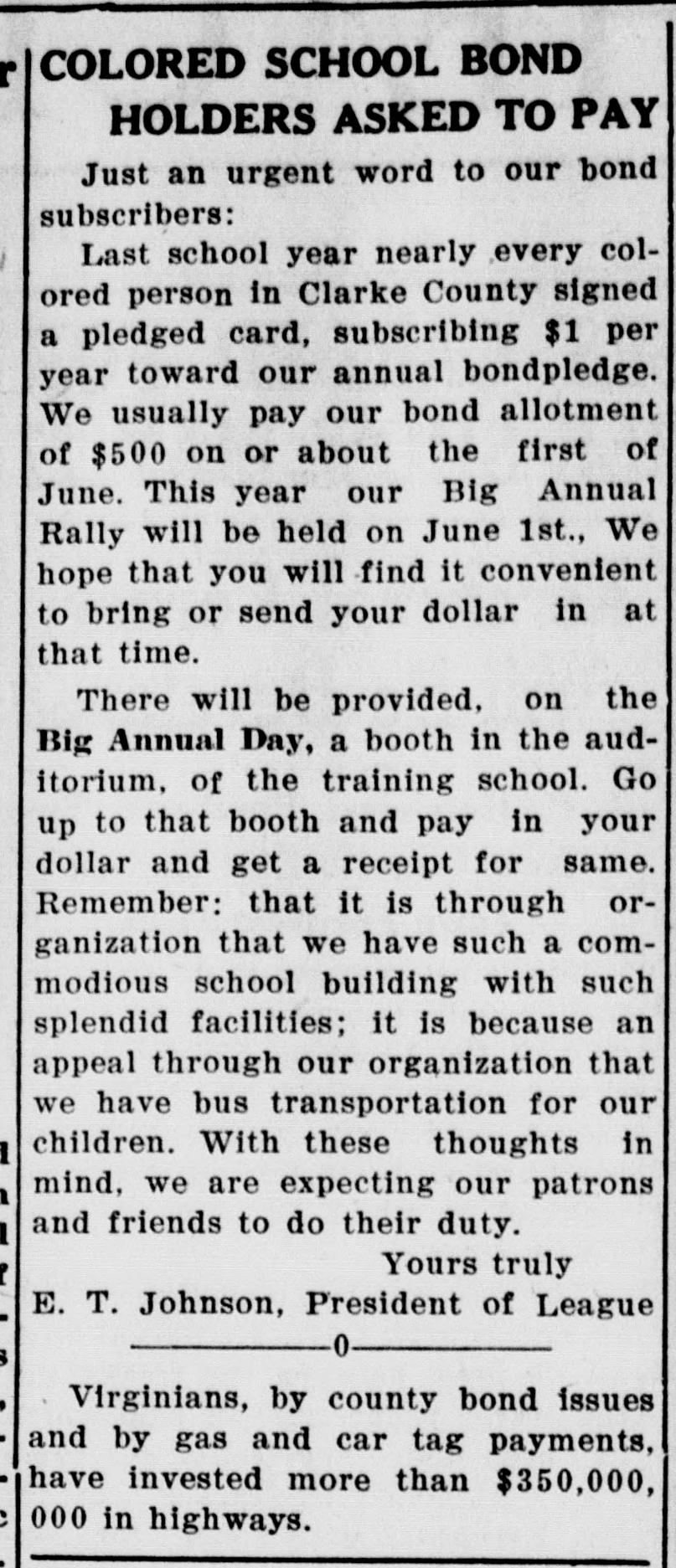
In 1930 Black families in Clarke County dug the foundation of a new building for the Clarke County Training School and pledged $500 a year toward it. Through the 1930s the Clarke Courier followed the school as its League raised money for a bus, its judging teams won honors, and its pageants, games and commencements drew the community in. In 1939 the League was still asking each subscriber for a dollar a year.

What the evidence says Clarke Courier reports of 1930 document the contract, the patrons' digging and the cornerstone, and the Courier of 1936 to 1940 records the League's bus, the judging teams, announced pageants and games, and three commencements. A Rosenwald Fund card and a Slater Fund list add outside records of the building and the school.

  • 7 min read
  • 27 sources
Civic life & gathering✓ Supported

Clarke's home front: watching the sky and making do

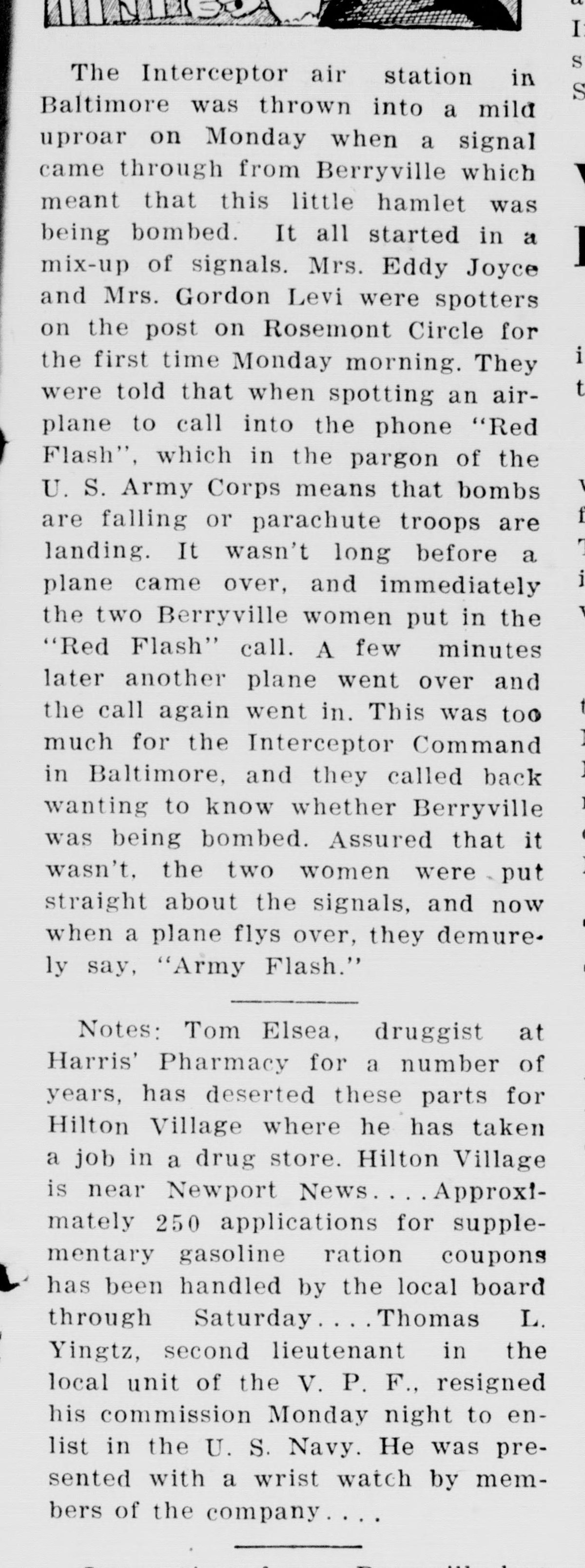
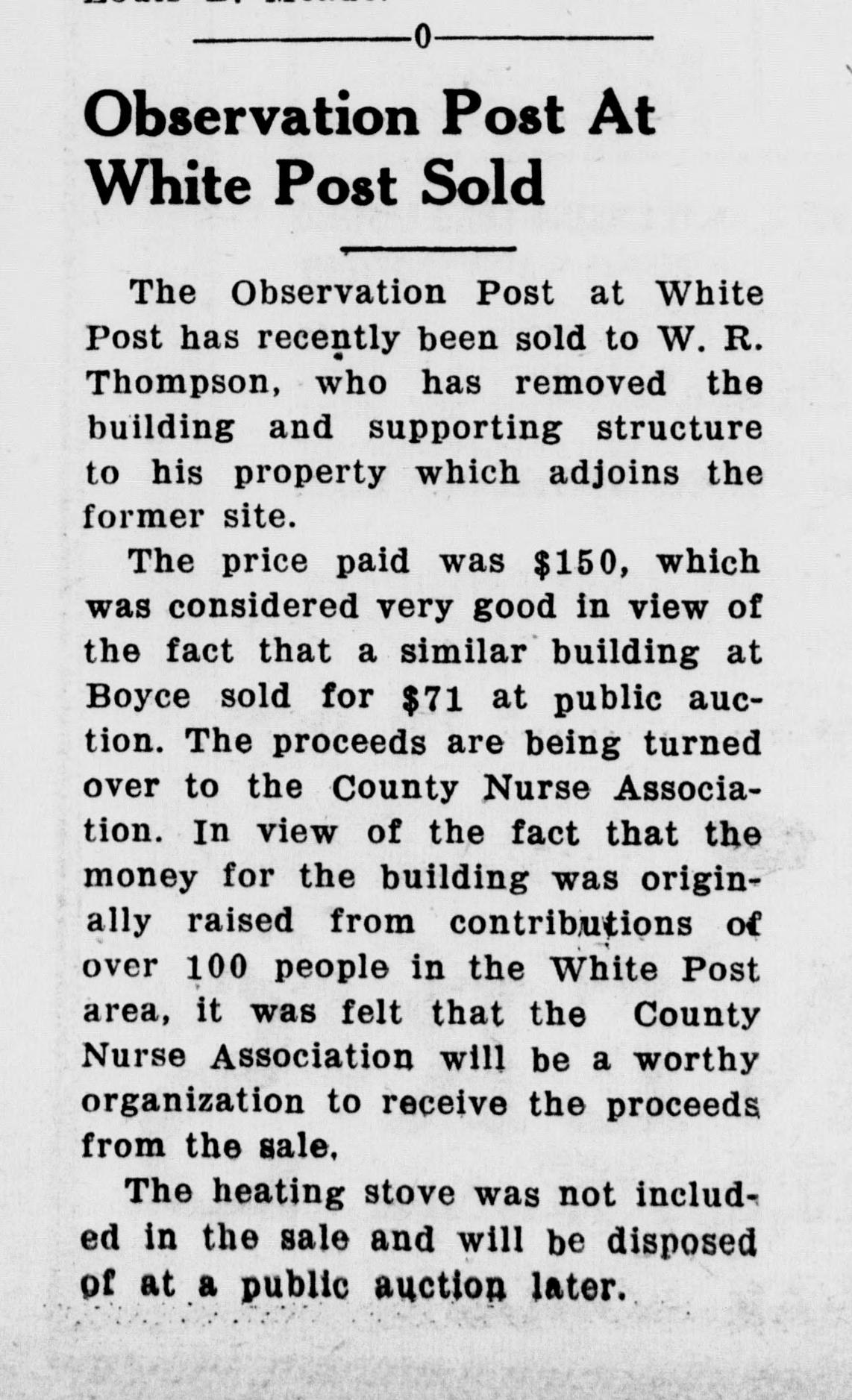
In June 1941, six months before Pearl Harbor, the Clarke Courier reported volunteers organizing aircraft observation posts across the county. Over the next two years it recorded tire and gasoline rationing reshaping that watch, schoolhouses serving as registration offices for sugar and gasoline, neighbors building and dedicating posts of their own, and the posts' closing by War Department order in July 1943.

What the evidence says Courier reports and notices from June 1941 to August 1945, each read on a Library of Congress page image, document the county's aircraft warning posts, the tire board, the sugar and gasoline registrations, the posts' closing and the Boyce station's sale. They do not corroborate the column's "Red Flash" story, give a final sugar count or show who bought the Boyce station.

  • 7 min read
  • 18 sources
Civic life & gathering? Unconfirmed

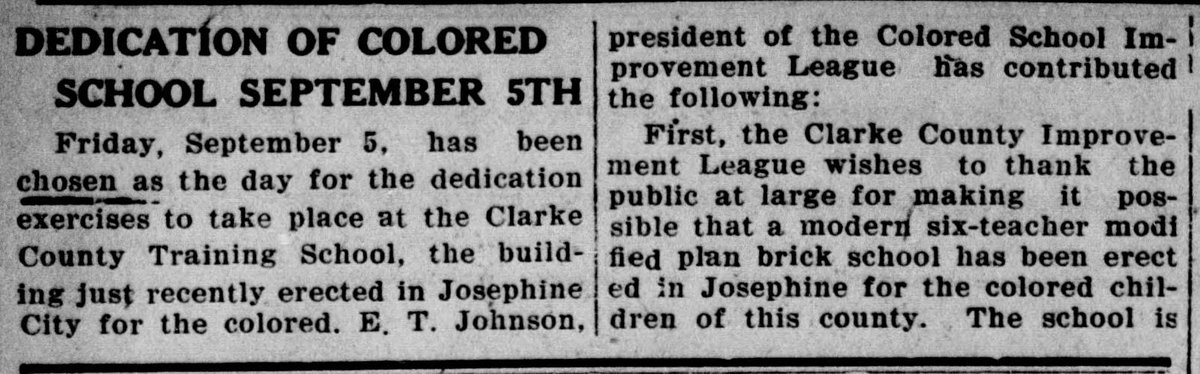
Clarke County Training School: opening day and the debt that followed

In September 1930 Black families in Clarke County dedicated the new brick Clarke County Training School in Josephine City, with state and Rosenwald speakers, a rock pile still uncrushed and $680 owed for chairs. Through the 1930s their League paid toward the building with pageants, festivals and a $500 yearly pledge. By 1941 the school bore the name of Dr. W. T. B. Williams, and its principal, E. T. Johnson, bade farewell to the pageants in 1944 and died in 1945.

What the evidence says Clarke Courier notices and reports from August 1930 to December 1945, each read on a Library of Congress page image, document the dedication and its program, the patrons' costs and debts, the school's first year, the League's pledge and payments through 1939, the school's renaming, the principal's last pageant, his obituary and a letter in his memory. None of them reports the League's bond paid off.

  • 9 min read
  • 25 sources
Civic life & gathering✓ Supported

Dear Dan: Clarke's home front, 1943–1945

For more than three years the Clarke Courier wrote a weekly "Dear Dan" letter to a man overseas. Its pages from 1943 to 1945 show volunteers stretched thin at the aircraft spotter posts, a harvest brought in by boys, school children, traveling crews, convicts and prisoners of war, the Pope family's long wait for a son held by Japan, and a town that celebrated victory twice.

What the evidence says Clarke Courier columns, editorials, reports and notices from 1943 to 1945, each read on a Library of Congress page image, document the spotter posts' shortage of volunteers, the 1944 harvest labor as the county agent reported it, the Pope family's news of a son held by Japan, and the town's two victory celebrations.

  • 10 min read
  • 32 sources
Civic life & gathering✓ Supported

A pencil at Lanham's: the Boyce bank robbery of 1965

On April 1, 1965, two armed men robbed the Boyce branch of the Bank of Clarke County. A customer's pencil-written license number, relayed to state police, led a trooper to stop the getaway car within the half hour. The account that follows is built entirely from the Winchester Evening Star's contemporary reporting and one conflicting reprint on the money recovered; a fourth defendant's final result is not established in the reports reviewed for this account.

What the evidence says Eight Winchester Evening Star issues from April through September 1965, plus one modern reprint of a ninth, conflicting April 8, 1965 account. None of the nine items was read directly by the editors who wrote this account.

  • 4 min read
  • 9 sources
Service & war✓ Supported

Mosby's last negotiations at Millwood

In April 1865 Union Major-General Winfield S. Hancock sought Colonel John S. Mosby’s surrender on the terms given Lee. Two Confederate memoirs, published decades apart, describe negotiations at Millwood that ended without it.

What the evidence says Two retrospective memoirs, decades apart, telling a closely similar story.

  • 4 min read
  • 3 sources
Civic life & gathering✓ Supported

Who the Old Chapel remembers

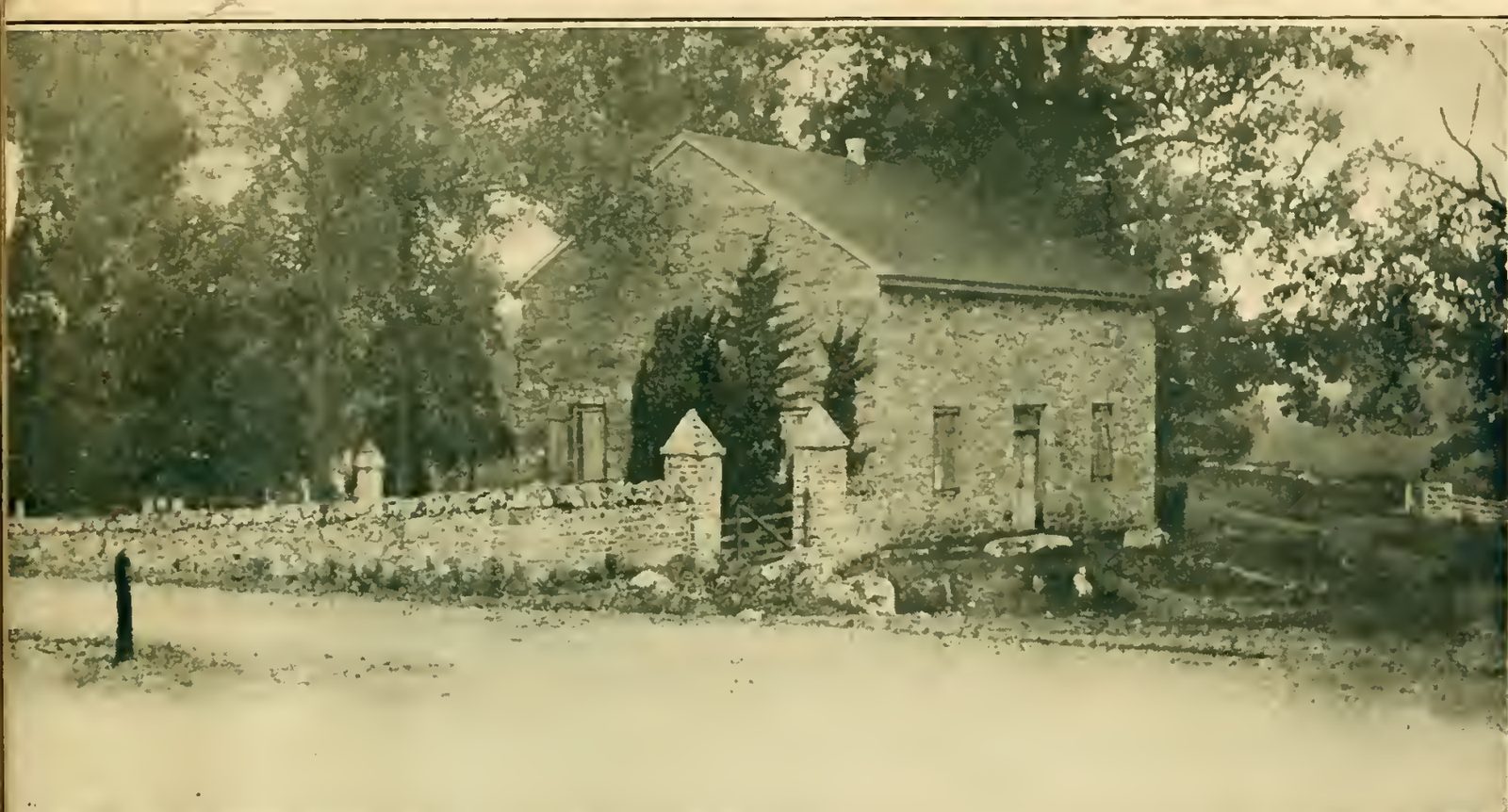
Charles Randolph Hughes’s 1906 compilation "Old Chapel," Clarke County, Virginia records who was buried in the chapel’s cemetery, by its own admission incompletely. This story reads what it says, and does not say, about the people it names only briefly.

What the evidence says One 1906 compiled record, read for what it names and what it leaves out.

  • 5 min read
  • 1 source
Civic life & gathering✓ Supported

The Berryville Coffee Club

The Clarke Courier and Clarke Times-Courier, 1965–2007, trace an informal daily gathering of Berryville men — the "Coffee Club" — through four ownership changes at the Soda Shop, a 1977 fire, a 1978 merger, and later moves to the Town House, Jane’s Lunch and, once, the Tastee Freez. No address for the Soda Shop is ever given; this story reads what the record says and does not say.

What the evidence says Newspaper mentions across four decades, read for what they confirm and what they leave unresolved.

  • 5 min read
  • 13 sources
Civic life & gathering✓ Supported

Before the Training School

A single 2000 National Register nomination, the Millwood Colored School form, is the source for nearly everything here: a Black teacher named in an 1868 report, a free school at Millwood in 1869, a teacher appointed in 1873 and the Courier's own comment on it, county school counts for 1871 to 1888, and an 1888 school lot. Each reaches us through the nomination, not the papers, reports and deed it describes.

What the evidence says One 2000 nomination, read for what it quotes and paraphrases from sources this account has not seen.

  • 3 min read
  • 1 source
Service & war✓ Supported

Bells and flowers: Armistice and Memorial Day in Clarke, 1903 to 1946

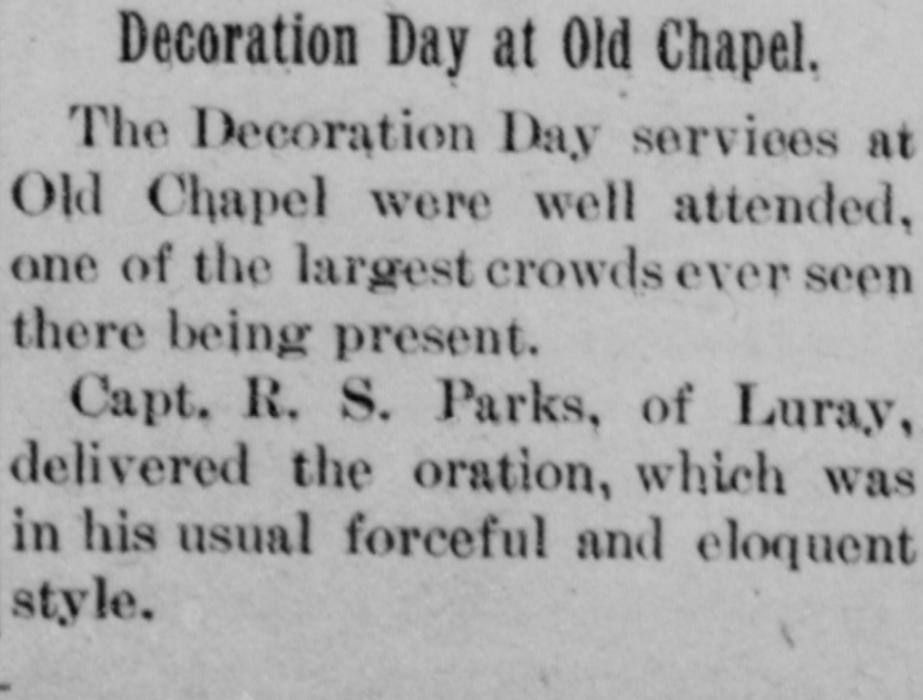
For more than forty years Clarke kept two days for its soldiers.The Clarke Courier reported Decoration Day at Old Chapel and Green Hill from 1903, a false armistice in 1918, a welcome home for 5,000 in 1919, and Armistice Days of bells, parades and silence under the Legion post. In wartime the days turned to rain, walking and blood drives.

What the evidence says Twenty-seven Clarke Courier reports, notices and editorials from 1903 to 1946, each read on a Library of Congress page image, show Decoration and Memorial Day services at Green Hill and Old Chapel, the false and the real armistice of 1918, the July 4, 1919 welcome home, and the Legion post's Armistice Days.

  • 7 min read
  • 26 sources
Civic life & gathering? Unconfirmed

The Clarke Rifles: Berryville's company, 1859 to 1920

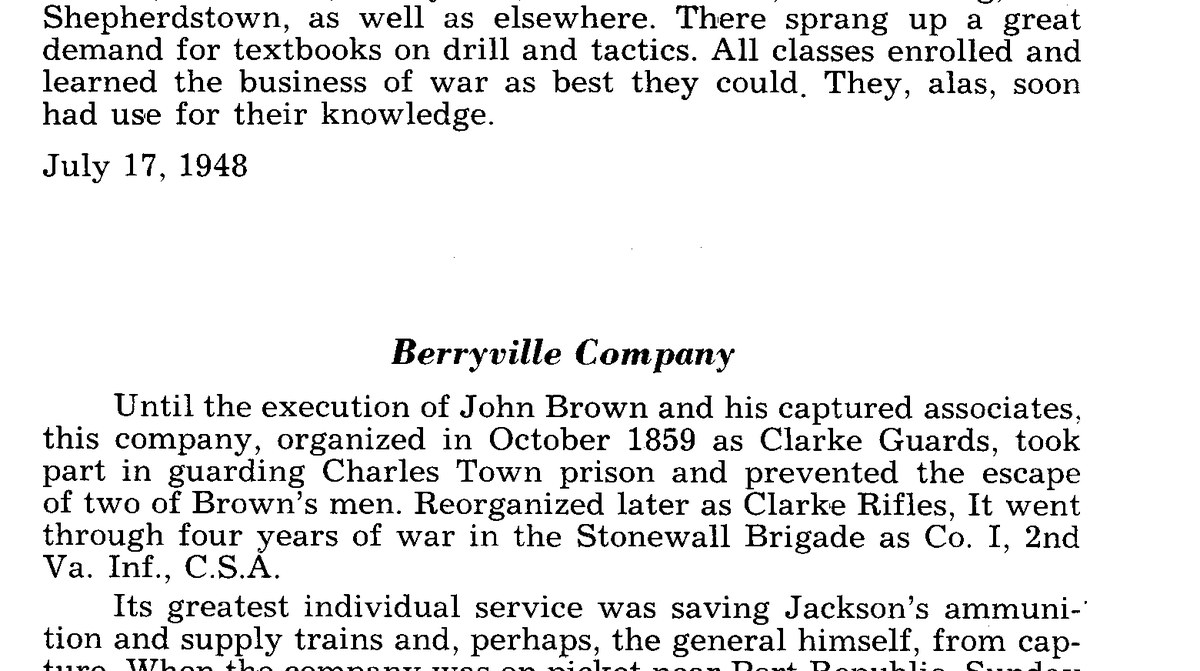
Berryville sent one infantry company to the Stonewall Brigade. Its story survives less in records than in remembrance: a local historian's column, and the Clarke Courier's notices and comrades' letters as the men died, from "Jim" O'Bannon and "Kate" Shepherd in 1905 to John R. Shipe and "Uncle Bill" Kelly in 1920.

What the evidence says A comrade's letter of 1905, a tribute and a death notice of 1920 and a reprinted notice of 1905, all from the Clarke Courier and read on the Library of Congress page images, with a 1948 local history reprinted by the Clarke County Historical Association, describe the Clarke Rifles from 1859 to 1920.

  • 6 min read
  • 5 sources
Service & war✓ Supported

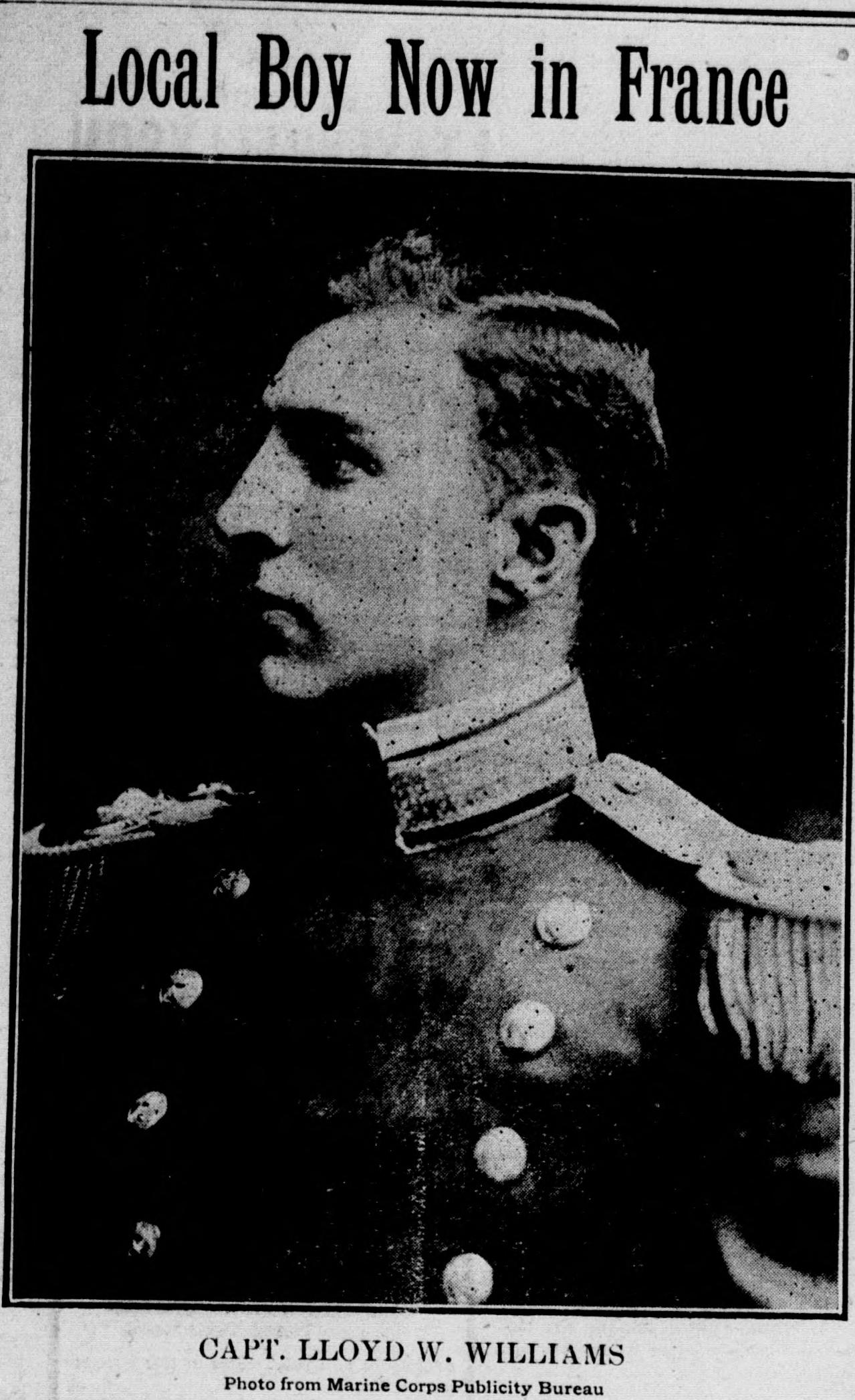
Stars on the flags: Clarke's churches in the World War

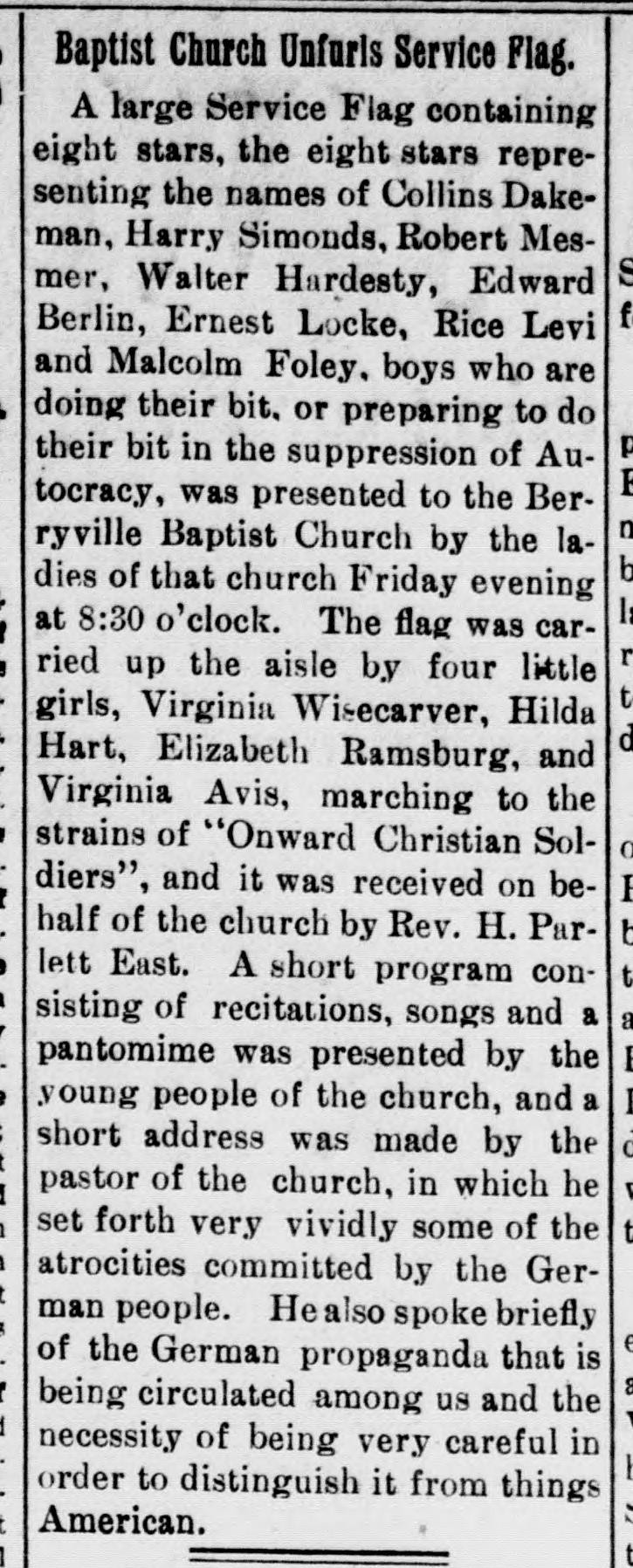
In 1918 Clarke's churches hung service flags with a star for each of their men. Grace Church in Berryville sent its rector to France as a chaplain and mourned Capt. Lloyd W. Williams, the first Clarke man to die in the war; Christ Church at Millwood received an altar from a mother whose two sons came home. The Clarke Courier reported it week by week, and in 1927 the Virginia War History Commission printed the churches' own lists of their men.

What the evidence says Ten Clarke Courier items of 1918 to 1921, read on the Library of Congress page images, and the Virginia War History Commission's 1927 history of the county, read on the HathiTrust page images, describe the churches of Berryville and Millwood in the First World War.

  • 7 min read
  • 11 sources
Service & war✓ Supported

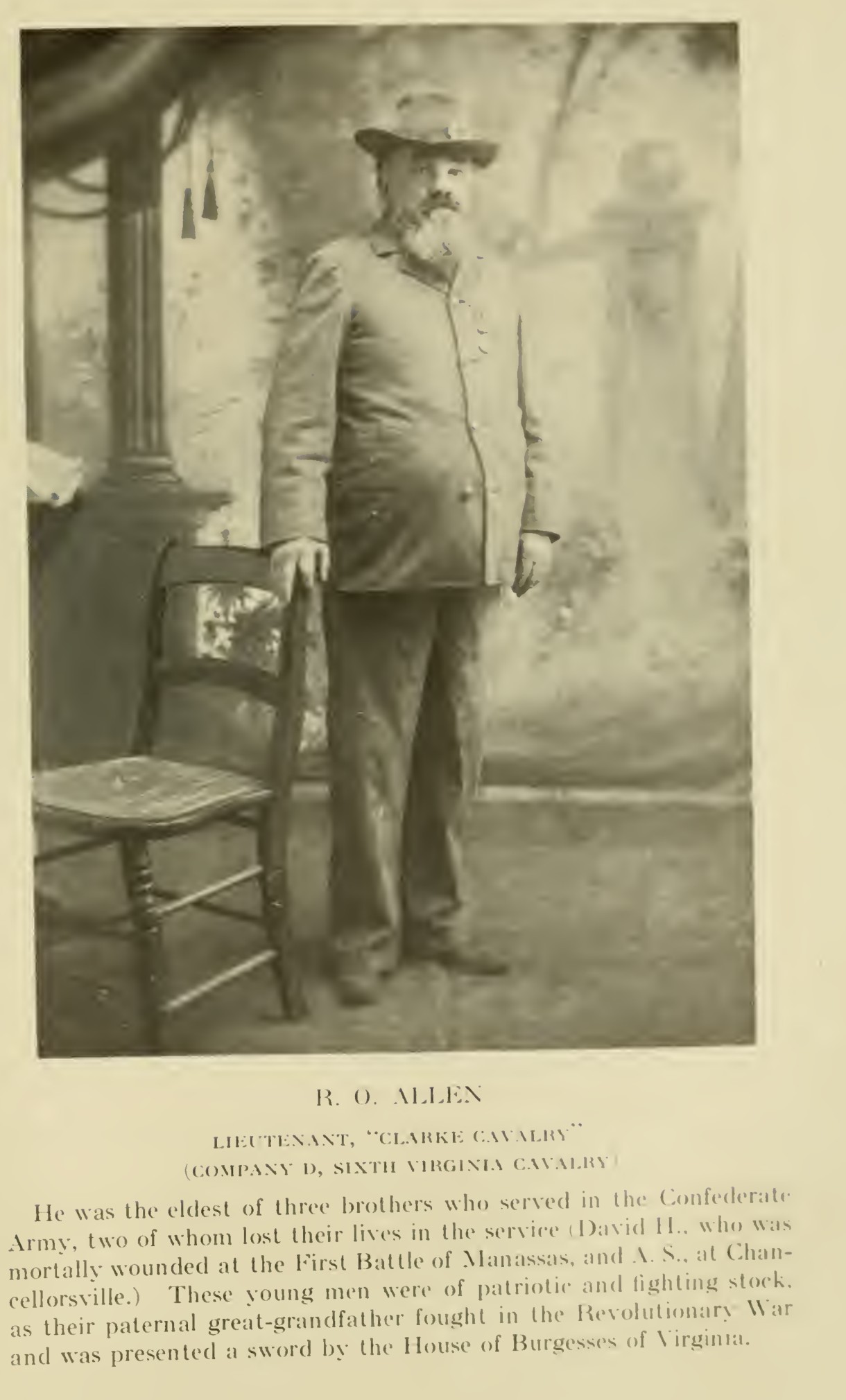
The last roll call: the Clarke Cavalry, 1884 to 1918

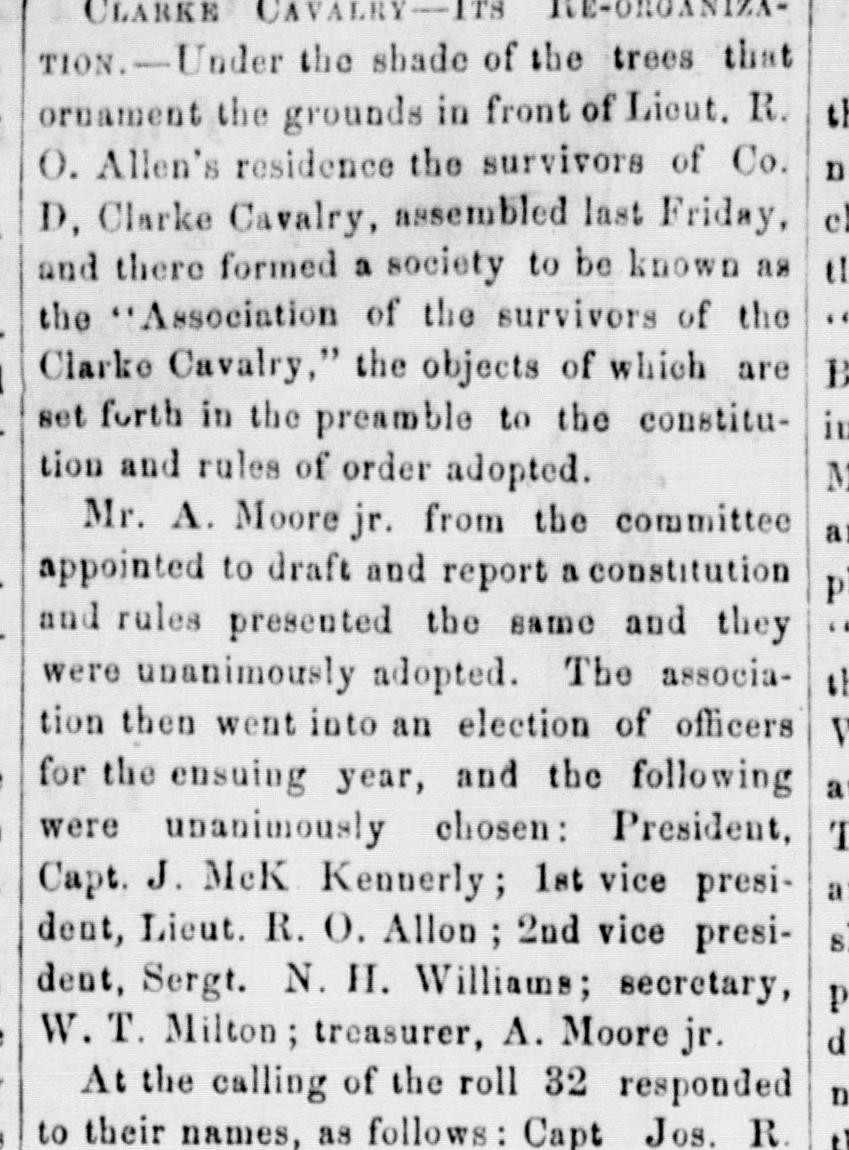
In 1884 the survivors of the Clarke Cavalry formed an association under the trees in front of R. O. Allen's house, and 32 answered the roll. For thirty-four years they met each summer. They led the county's effort for a monument to its Confederate dead, brought a comrade's remains home from Luray, and called the roll of the living and the dead, as the Clarke Courier reported each year, until four answered in 1918.

What the evidence says Twelve Clarke Courier items of 1884 to 1918, read on the Library of Congress page images, report the founding, the monument effort, the reburial of F. P. Topper and the reunions of the survivors of the Clarke Cavalry.

  • 6 min read
  • 12 sources
Service & war✓ Supported

Held in the North: Clarke men in Union prisons

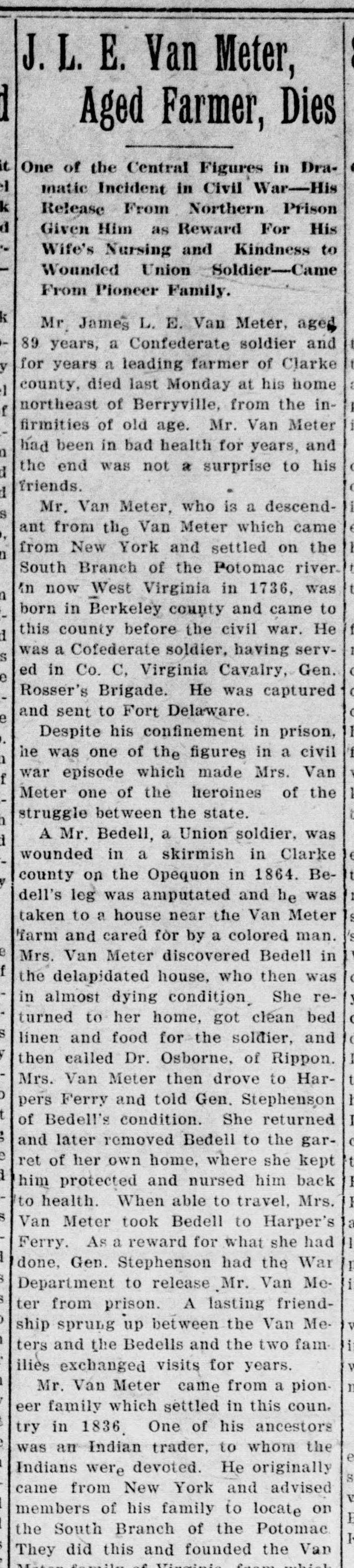
Many Clarke men spent part of the war in Northern prison camps. Their death notices in the Clarke Courier, written decades later, kept their stories: a fifteen-year-old cavalryman held five months at Fort Delaware, a color-bearer who traded his whiskey ration for bread at Elmira and swam a river to get home, and a farmer released because his wife had nursed a wounded Union soldier back to health in her garret.

What the evidence says Eight Clarke Courier notices and letters of 1900 to 1923, read on the Library of Congress page images, tell what the county remembered of its Confederate soldiers held in Northern prisons.

  • 6 min read
  • 8 sources
Service & war✓ Supported

Five sons in France: the Lloyd brothers of Clarke

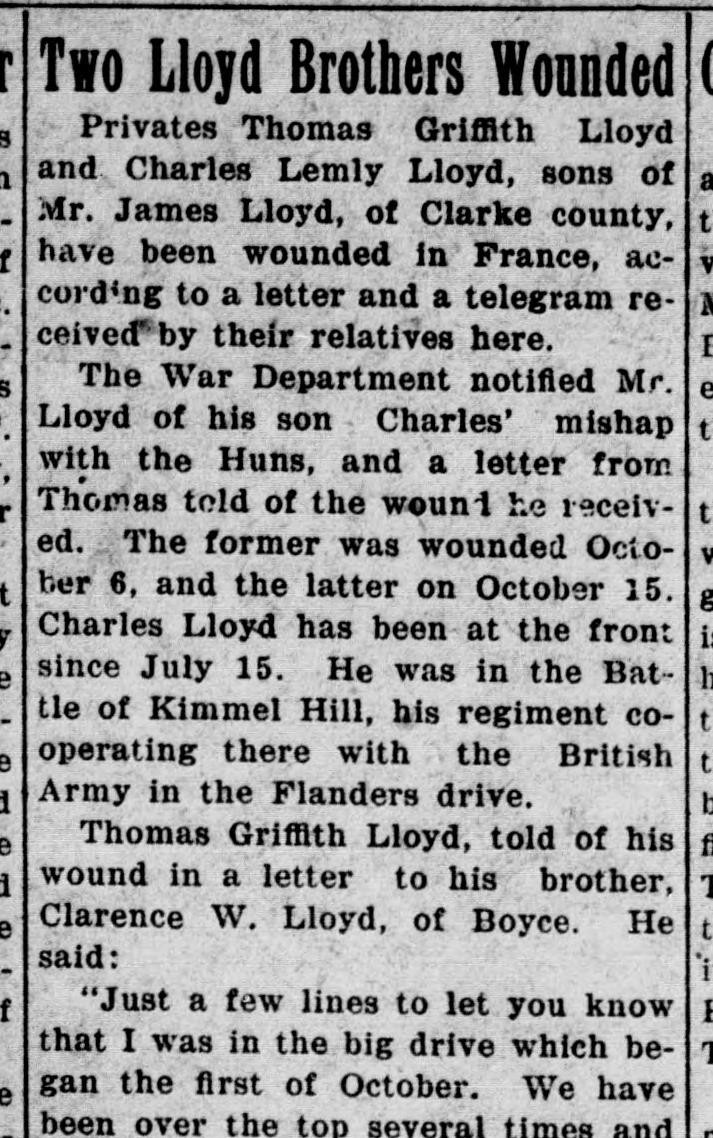
J. W. Lloyd of near Berry's Ferry had five sons in the First World War, and all five went to France. The Clarke Courier followed them: two wounded in October 1918, a false report of a death, Howard's words on a Berryville street, and Charles, gassed in the Argonne, the last to come home. In 1922 the youngest, Linton, drowned near his father's house.

What the evidence says Six Clarke Courier items of 1918 to 1922, read on the Library of Congress page images, and the Virginia War History Commission's 1927 county history follow the five Lloyd brothers through the First World War.

  • 6 min read
  • 8 sources
Service & war✓ Supported

Boys in the ranks: Clarke men who went to war young

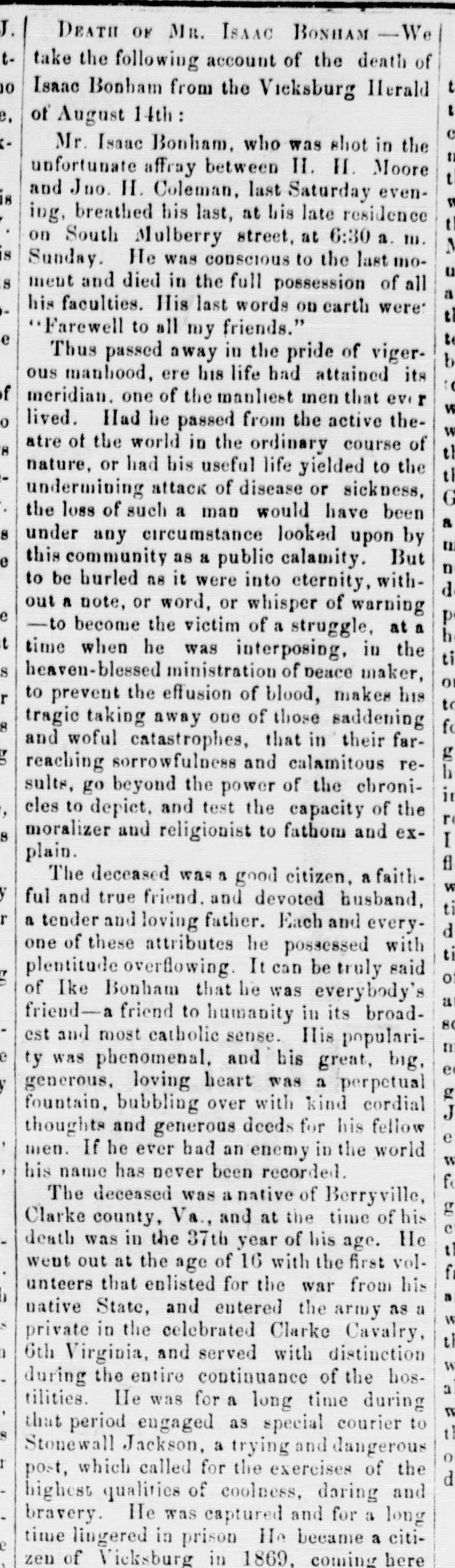
When five Clarke Confederates died between 1883 and 1924, the Clarke Courier remembered them as boys when they went to war: Isaac Bonham at 16 with the first volunteers, Burwell McGuire "in his 'teens," Charles T. Jones at 17, W. W. Bowles at 16, and William E. Reed "scarcely more than a boy." The ages are the papers' own, written years later.

What the evidence says Five Clarke Courier death notices of 1883 to 1924, read on the Library of Congress page images, each say the man went to war young.

  • 5 min read
  • 5 sources
Service & war✓ Supported

Brandy Station, June 9, 1863: Lieutenant Allen and Sergeant Moore

At Brandy Station on June 9, 1863, Gold’s history says, Lieut. R. O. Allen of the Clarke Cavalry fired his last pistol shot and killed Col. B. F. Davis of the 8th New York Cavalry. Allen was wounded that day and carried absent until he was retired to the Invalid Corps in November 1864; William Moore’s horse was shot in the same action.

What the evidence says Gold’s 1914 History of Clarke County, read on the page images of the hosted copy, and cards from the compiled service records of Robert O. Allen and William Moore, read on Fold3 images.

  • 5 min read
  • 3 sources
Service & war✓ Supported

Capt. Lloyd W. Williams of the Marines, 1917 to 1921

Capt. Lloyd W. Williams of the Marine Corps went to France with the first contingent in 1917 and died of wounds received at Belleau Wood in June 1918, the first son of Clarke killed in France, the Clarke Courier said. Its reports give three dates for his death and several accounts of how he died, and credit him with "Retreat? Hell, no!" in more than one wording.

What the evidence says Clarke Courier items of 1917 to 1923, read on the Library of Congress page images: reports of his going overseas, his promotion, his death, a chaplain's letter, two accounts of his famous reply, his burial and the county's war honors.

  • 7 min read
  • 17 sources
Service & war✓ Supported

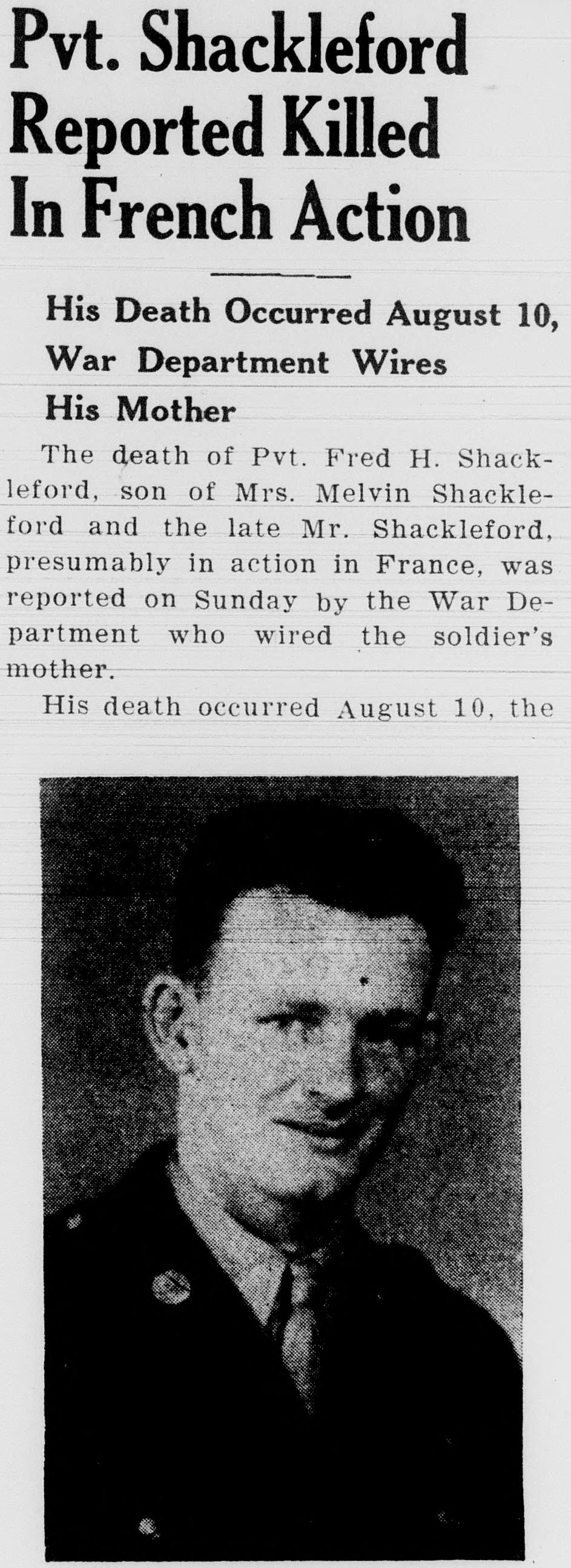
Pvt. Fred H. Shackleford, 1944: in action, or by accident

Pvt. Fred H. Shackleford of Berryville died in France on August 10, 1944. The Clarke Courier first reported him killed, presumably in action, then accidentally shot by a captured German sub-machine gun held by a companion. Its later columns said both, and the War Department's 1946 list counts him under "Died (Non-battle)."

What the evidence says Clarke Courier items of 1942 to 1948, read on the Library of Congress page images: the reports of his death, the paper's look-back columns, the War Department's 1946 list as the paper printed it, and the report of his return in 1948.

  • 5 min read
  • 12 sources
Service & war✓ Supported

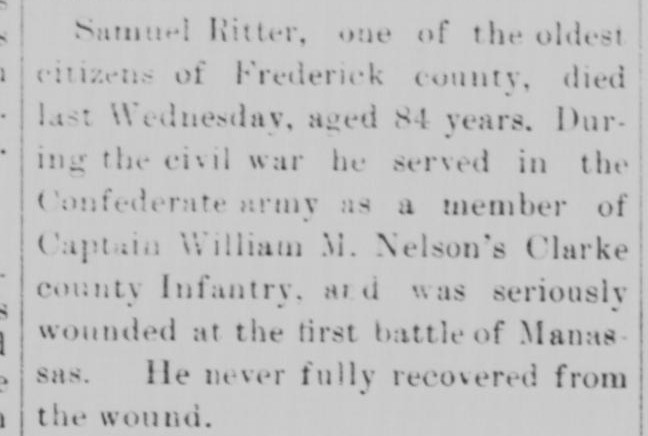
Wounded: five Clarke soldiers and what they carried home

Five Clarke County Confederate soldiers came home wounded, and their death notices in the Clarke Courier still remembered it decades later: a man hit at the first battle of Manassas who never fully recovered, a cavalryman crippled in the arm on the same day, and wounds from Kernstown, Brandy Station and Gettysburg.

What the evidence says Five Clarke Courier death notices of 1899 to 1914, read on the Library of Congress page images, name the battle where each man was wounded and what the wound cost him.

  • 4 min read
  • 5 sources
Service & war✓ Supported

World War I: the county's soldiers, 1917 to 1923

The roll of veterans on this site lists 428 people who served in World War I. The Clarke Courier printed the county's own Roll of Honor in July 1919, reported the first Clarke man killed in France, followed the wounded home, and in 1923 printed the honors the Virginia War History recorded for Clarke soldiers.

What the evidence says Clarke Courier items of 1918 to 1923, already published on this site and read on the Library of Congress page images, and the roll of veterans.

  • 3 min read
  • 8 sources
Service & war? Unconfirmed

The Civil War: the county's soldiers, 1861 to 1865

The roll of veterans on this site lists 943 people who served in the Civil War. Berryville's company served four years in the Stonewall Brigade, and the Clarke Cavalry rode in the 6th Virginia. The Clarke Courier printed what the survivors told of battle and of Northern prisons, and followed them to the monument of 1900 and their reunions into 1918.

What the evidence says Clarke Courier items of 1883 to 1923, Gold's 1914 history, Meade's 1948 column and a compiled service record, already published on this site, and the roll of veterans.

  • 3 min read
  • 13 sources
Service & war✓ Supported

World War II: the county's soldiers, 1941 to 1946

The roll of veterans on this site lists 603 people who served in World War II. The Clarke Courier followed them from the county's first aircraft-warning posts in 1941 to the War Department's list of the dead in 1946, with the four Pope brothers of near Berryville, a soldier's death in France reported first as in action and then as an accident, and the night the war ended.

What the evidence says Clarke Courier items of 1941 to 1946, already published on this site and read on the Library of Congress page images, and the roll of veterans.

  • 3 min read
  • 14 sources
Land, work & community✓ Supported

Consumption, croup and cholera infantum: how Clarke died, 1853 to 1896

Clarke County's death register records 2,322 deaths from 1853 to 1896. Before the war the childhood epidemics and consumption led among white deaths, and nearly half the deaths of enslaved people have no cause. From 1880 consumption and lung disease led for white and Black residents alike, about a quarter of the dead were babies, and white people were far more often old.

What the evidence says Patricia B. Duncan's 2008 abstract of the Clarke County death register, counted from the entries on this site's deaths collection, with five entries quoted from her printed pages.

  • 4 min read
  • 1 source
How this place came to be✓ Supported

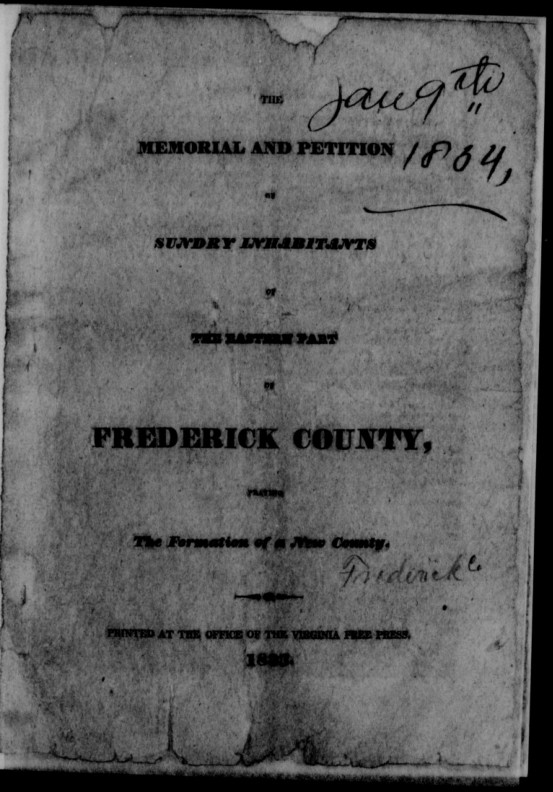
How Clarke left Frederick: the petitions and the newspapers, 1833 to 1836

In September 1833 a meeting at Berryville asked for the eastern end of Frederick County to become a county of its own. The House of Delegates turned the petition down in 1834 and postponed a bill in 1835. A third petition carried in March 1836, after a tied vote that the Speaker broke, and the new county was named Clarke. Its justices first sat at Berryville on March 28, 1836.

What the evidence says Seventy-eight newspaper articles of 1833 to 1837 found on Virginia Chronicle, and the thirty Library of Virginia files of petitions and papers on the division, with the passages quoted here read on the images.

  • 5 min read
  • 24 sources
How this place came to be✓ Supported

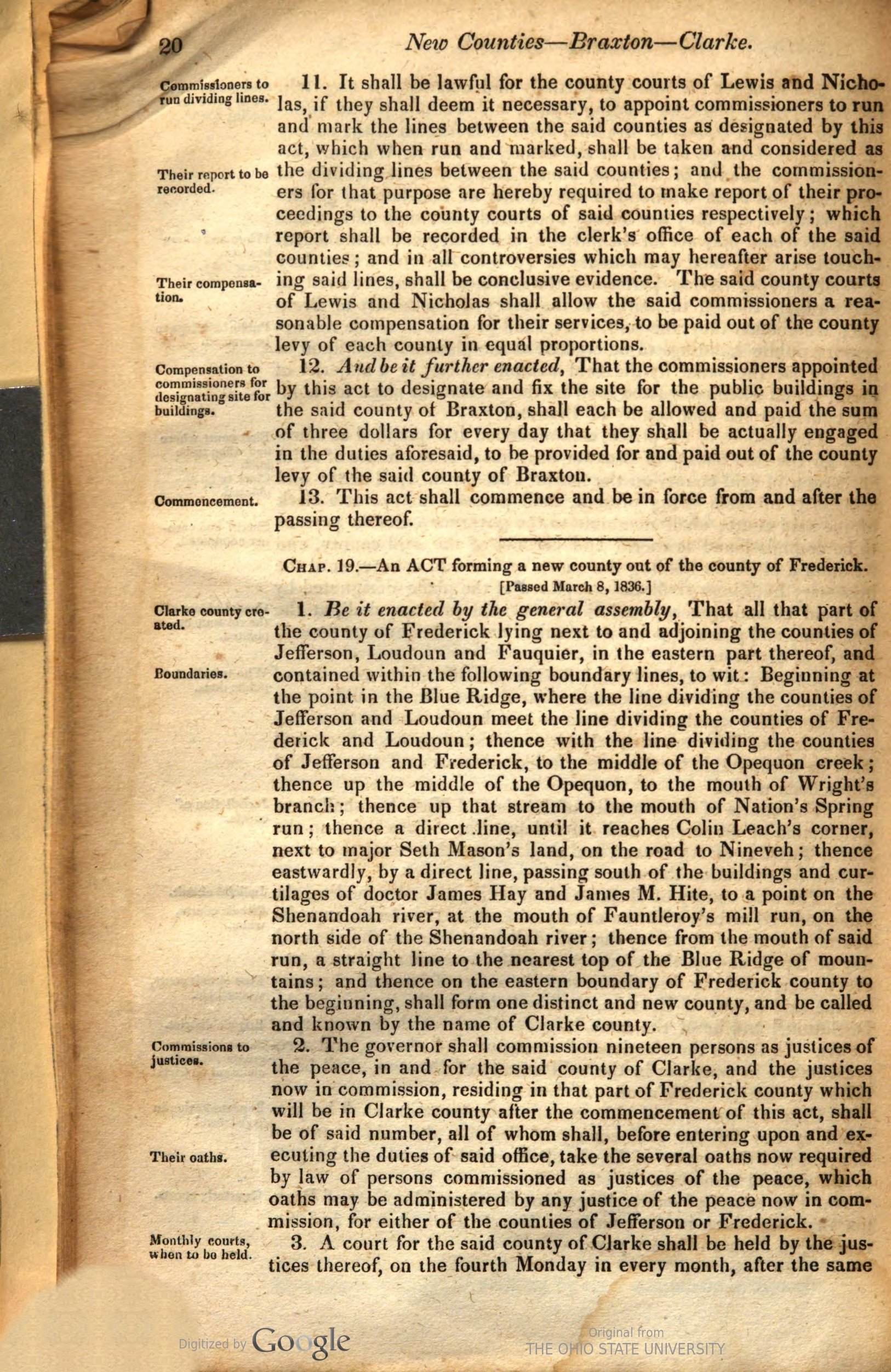
Why Clarke? The county's name and the man it honors

The House of Delegates named the new county Clarke in March 1836, "in honor of Gen. George R. Clarke," the Revolutionary War general usually written George Rogers Clark. The act itself, in the session laws, reads "Clarke county," with the e, though one report that week spelled it Clark. The House journal says only that a blank in the bill "was filled." Clark was born near Charlottesville, grew up in Caroline County and died in Kentucky in 1818.

What the evidence says Newspaper reports of March 1836 read on the page images, the act and the House journal of the session read on HathiTrust's scans, the county government's history and Encyclopedia Virginia's entry on Clark.

  • 3 min read
  • 8 sources
How this place came to be✓ Supported

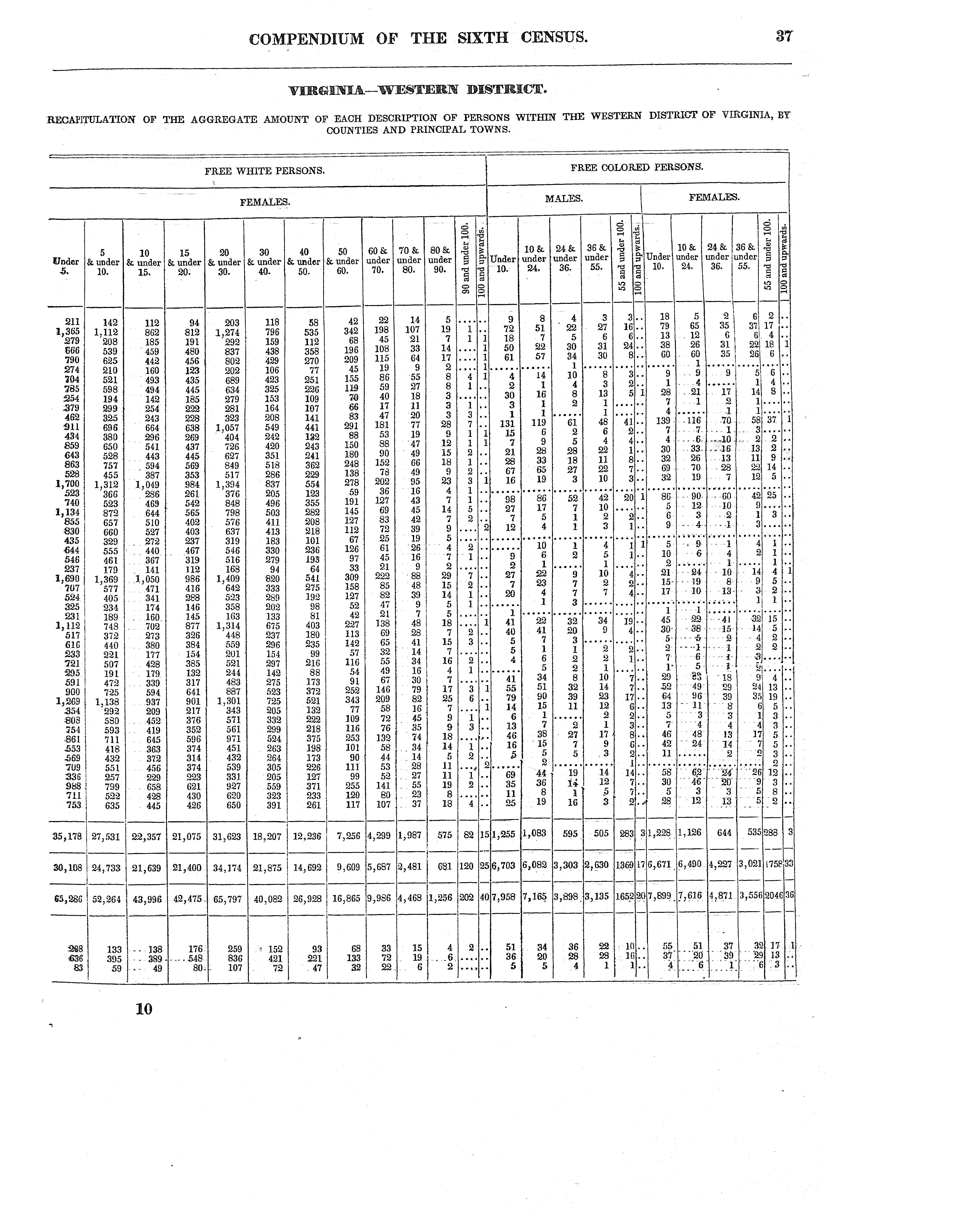
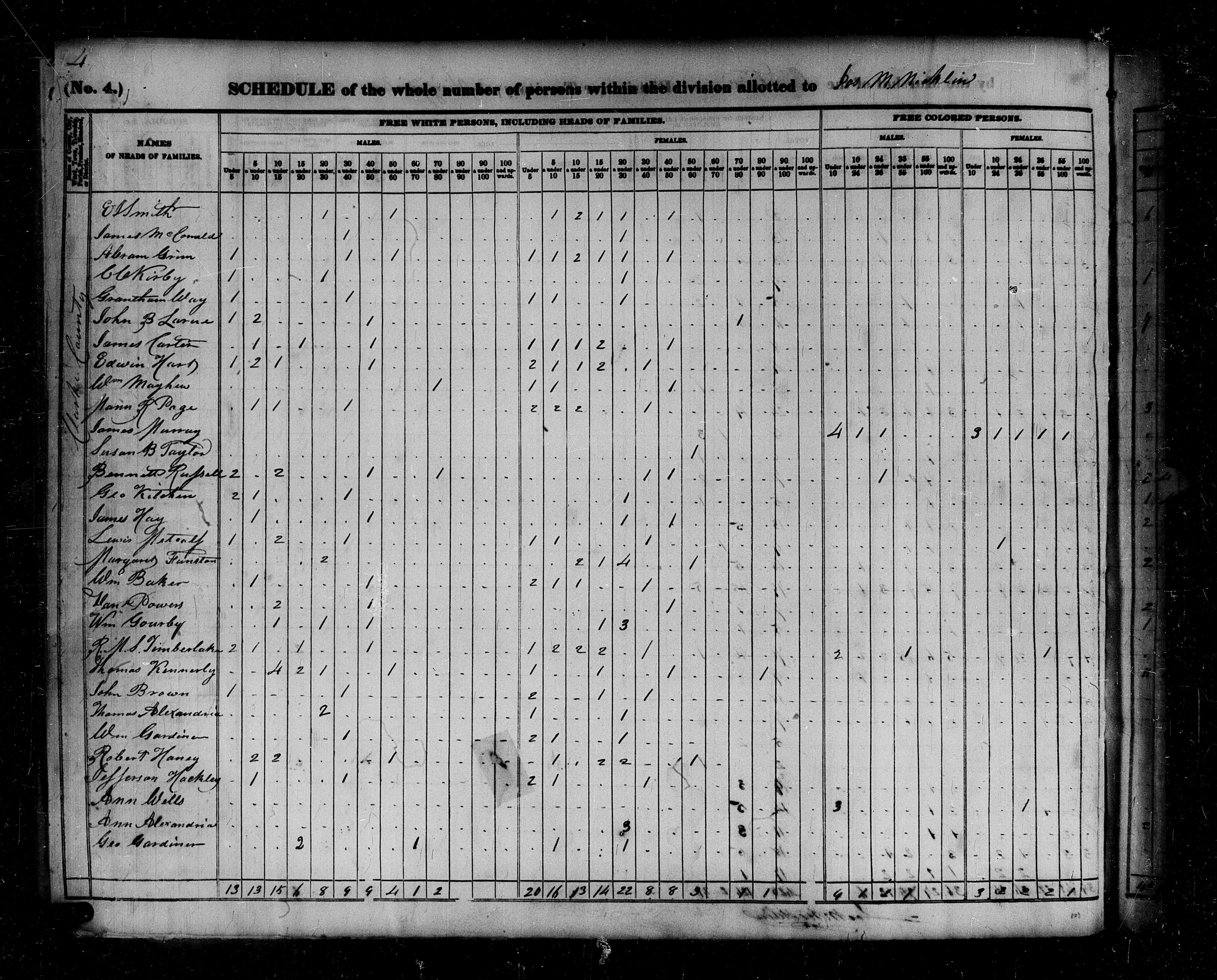
More than half enslaved: Clarke County in the census of 1840

The census of 1840 counted 3,325 enslaved people in Clarke County, 52.3 percent of its 6,353 people, and 161 free people of color. They were listed on 310 of the census's 538 household lines, but unevenly: the 46 largest lines held nearly half. Households headed by a Burwell held 276 people, by a Page 235.

What the evidence says The county's totals from the Compendium of the Sixth Census (1841), and the largest lines and the free colored households quoted from the census schedule as read on its page images.

  • 5 min read
  • 4 sources
How this place came to be✓ Supported

Free in a slave county: Clarke's free Black people, 1836 to 1862

The census of 1840 counted 161 free people of color in Clarke County, about one in forty. The county's tax lists of 1836 to 1862 name 302 of them, with their horses, their trades and, for a few, where they lived. Clarke wills promised freedom to others, and the law let people freed after 1806 stay in Virginia only with a court's leave.

What the evidence says The county's free Black taxpayers from MacDonald's index of the personal property tax lists, their households from the census of 1840, the freedoms promised in Clarke wills from Duncan's abstracts, and the law from the Code of Virginia of 1849.

  • 7 min read
  • 7 sources
Land, work & community

Rock Hall Farm

A stone farmhouse and a log cabin west of Berryville: the Hardesty family account and the people the estate held in slavery, the Kimballs’ working country home and Western friendships, and the farm’s remembered use as a lawyer’s retreat.

Search

Searches the released collection only.