
In 1870, twenty-four formerly enslaved African Americans purchased the land that became Josephine City. Their community went on to build a school through local contributions of labor and money.
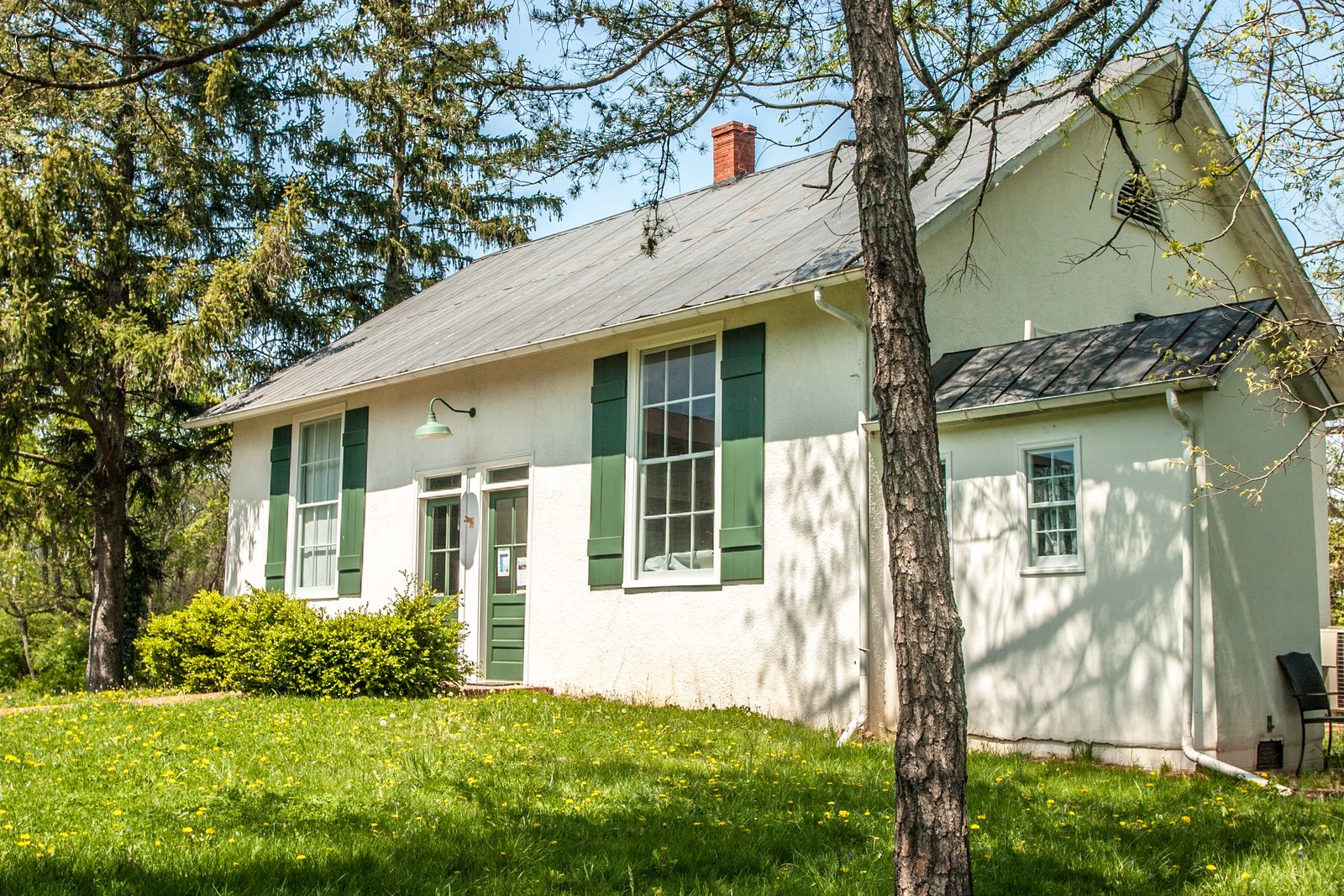
Photographed in 2013, not a historical photograph: it shows the school building as it stood then, long after the events in this story.
Photograph by Cecouchman, April 26, 2013, via Wikimedia Commons. Licensed CC BY-SA 3.0. Open the full image
Begin with the ordinary
In November 1867 Josephine Williams sold a shirt to her former enslavers. The receipt for it is described in Clermont's account, which identifies a particular transaction rather than a life. The original document has not been read here; the description has.
Source note: Clermont Farm / Cory A. Van Horn
Clermont describes a November 1867 receipt for a shirt sold by Josephine to her former enslavers.
What the source supports
A specific document has been identified by the institution.
Uncertainty
The source description, not the original receipt, was read. No amount or full transcription is supplied.
Source
Evidence role: supports. Supports the claim at the stated source level; see limits.
Josephine Williams
Clermont Farm / Cory A. Van Horn
Locator: Four-document list, item 2: November 1867 receipt
Checked: Page text reviewed. Original image not independently inspected.
Open sourceSource family: clermont-josephine. Multiple passages from one source are not independent witnesses.
AI-assisted source check · 2026-09-08. How this project checks its sources
From a transaction to a place
DHR describes an 1870 sale of 31 acres to 24 formerly enslaved African Americans. Williams was among the buyers. Clermont identifies her with Lots 1 and 2 on a September 1870 plat, then a May 1871 sale record involving her husband, Phillip Williams.
Source note: Virginia Department of Historic Resources, 2024
DHR dates Josephine City's founding to 1870 on a 31-acre parcel.
What the source supports
The district account identifies the transaction's year and parcel size.
Uncertainty
This is a summary of the underlying land records, not an inspection of the deed.
Source
Evidence role: supports. Supports the claim at the stated source level; see limits.
Josephine City Historic District, 168-5029
Virginia Department of Historic Resources · 2024-02-17 (last update)
Locator: Opening historical paragraph
Relevant passageincluding Josephine Williams, the presumed namesake of Josephine City.
Checked: Page text reviewed. Original image not independently inspected.
Open sourceSource family: dhr-josephine. Multiple passages from one source are not independent witnesses.
AI-assisted source check · 2026-09-08. How this project checks its sources
Source note: Virginia Department of Historic Resources, 2024
DHR describes 24 formerly enslaved African Americans as the land buyers.
What the source supports
The buyers are described in the district history.
Uncertainty
This pilot does not identify or resolve the identities of all 24 buyers.
Source
Evidence role: supports. Supports the claim at the stated source level; see limits.
Josephine City Historic District, 168-5029
Virginia Department of Historic Resources · 2024-02-17 (last update)
Locator: Opening historical paragraph
Relevant passageincluding Josephine Williams, the presumed namesake of Josephine City.
Checked: Page text reviewed. Original image not independently inspected.
Open sourceSource family: dhr-josephine. Multiple passages from one source are not independent witnesses.
AI-assisted source check · 2026-09-08. How this project checks its sources
Source note: Virginia Department of Historic Resources, 2024
DHR includes Josephine Williams among the buyers and calls her the presumed namesake.
What the source supports
Both her inclusion and the source's qualification are retained.
Uncertainty
The naming explanation is not presented as conclusively established.
Source
Evidence role: supports. Supports the claim at the stated source level; see limits.
Josephine City Historic District, 168-5029
Virginia Department of Historic Resources · 2024-02-17 (last update)
Locator: Opening historical paragraph
Relevant passageincluding Josephine Williams, the presumed namesake of Josephine City.
Checked: Page text reviewed. Original image not independently inspected.
Open sourceSource family: dhr-josephine. Multiple passages from one source are not independent witnesses.
AI-assisted source check · 2026-09-08. How this project checks its sources
Source note: Clermont Farm / Cory A. Van Horn
Clermont identifies Josephine as the purchaser of Lots 1 and 2 in a September 1870 plat.
What the source supports
The institutional account names lots and a month.
Uncertainty
No lot geometry is reconstructed or displayed; original plat inspection remains open.
Source
Evidence role: supports. Supports the claim at the stated source level; see limits.
Josephine Williams
Clermont Farm / Cory A. Van Horn
Locator: Four-document list, items 3 and 4: 1870 plat and 1871 sale
Checked: Page text reviewed. Original image not independently inspected.
Open sourceSource family: clermont-josephine. Multiple passages from one source are not independent witnesses.
AI-assisted source check · 2026-09-08. How this project checks its sources
Source note: Clermont Farm / Cory A. Van Horn
Clermont identifies a May 1871 clerk record of the sale of Lot 1 with her husband, Phillip Williams.
What the source supports
A follow-up record is described by the source.
Uncertainty
The clerk record and the identities in it were not independently inspected.
Source
Evidence role: supports. Supports the claim at the stated source level; see limits.
Josephine Williams
Clermont Farm / Cory A. Van Horn
Locator: Four-document list, items 3 and 4: 1870 plat and 1871 sale
Checked: Page text reviewed. Original image not independently inspected.
Open sourceSource family: clermont-josephine. Multiple passages from one source are not independent witnesses.
AI-assisted source check · 2026-09-08. How this project checks its sources
Keep one important word
DHR calls Williams the "presumed namesake" of Josephine City. Clermont tells a more definite founding narrative. We retain the qualification rather than smoothing the accounts into certainty. Her age and death date also remain unresolved in the Clermont account reviewed.
Source note: Virginia Department of Historic Resources, 2024
DHR includes Josephine Williams among the buyers and calls her the presumed namesake.
What the source supports
Both her inclusion and the source's qualification are retained.
Uncertainty
The naming explanation is not presented as conclusively established.
Source
Evidence role: supports. Supports the claim at the stated source level; see limits.
Josephine City Historic District, 168-5029
Virginia Department of Historic Resources · 2024-02-17 (last update)
Locator: Opening historical paragraph
Relevant passageincluding Josephine Williams, the presumed namesake of Josephine City.
Checked: Page text reviewed. Original image not independently inspected.
Open sourceSource family: dhr-josephine. Multiple passages from one source are not independent witnesses.
AI-assisted source check · 2026-09-08. How this project checks its sources
Source note: Clermont Farm / Cory A. Van Horn
The Clermont account does not establish Josephine's age or when and where she died.
What the source supports
The limits of the reviewed account are made explicit.
Uncertainty
This does not establish that every possible record has been searched. No birth year is inferred from unnamed census entries.
Source
Evidence role: supports. Supports the claim at the stated source level; see limits.
Josephine Williams
Clermont Farm / Cory A. Van Horn
Locator: Opening paragraph; final two historical paragraphs
Checked: Page text reviewed. Original image not independently inspected.
Open sourceSource family: clermont-josephine. Multiple passages from one source are not independent witnesses.
AI-assisted source check · 2026-09-08. How this project checks its sources
The building ceased being used for educational purposes in 1971 and was completely renovated in 2002 to serve its current function as the Josephine School Community Museum.
A community builds a school
DHR dates the school to 1882 and credits local contributions of labor and money. It describes the original school's 1930 move and later home-economics use. The museum dates its inaugural exhibit to July 12, 2003.
Source note: Virginia Department of Historic Resources, 2024
DHR dates the Josephine City School to 1882 and describes local contributions of labor and money.
What the source supports
The school's date and community funding are supported by the institutional account.
Uncertainty
School-board and building records remain separate retrieval targets.
Source
Evidence role: supports. Supports the claim at the stated source level; see limits.
Josephine City School, 168-5027
Virginia Department of Historic Resources · 2024-02-17 (last update)
Locator: First historical paragraph
Relevant passageThe building was erected with contributions of labor and money from the local black citizenry
Checked: Page text reviewed. Original image not independently inspected.
Open sourceSource family: dhr-josephine. Multiple passages from one source are not independent witnesses.
AI-assisted source check · 2026-09-08. How this project checks its sources
Source note: Virginia Department of Historic Resources, 2024
DHR says the original school was moved in 1930 and used for home economics until 1971.
What the source supports
The old school's change of use is distinguished from construction of a later school.
Uncertainty
This is not a claim that all later educational buildings were the same structure.
Source
Evidence role: supports. Supports the claim at the stated source level; see limits.
Josephine City School, 168-5027
Virginia Department of Historic Resources · 2024-02-17 (last update)
Locator: Second historical paragraph, move and change of use
Checked: Page text reviewed. Original image not independently inspected.
Open sourceSource family: dhr-josephine. Multiple passages from one source are not independent witnesses.
AI-assisted source check · 2026-09-08. How this project checks its sources
Source note: Josephine School Community Museum
The museum dates its inaugural exhibit to July 12, 2003.
What the source supports
A specific milestone from the institution's own history.
Uncertainty
It does not establish present opening hours or public access.
Source
Evidence role: supports. Supports the claim at the stated source level; see limits.
History
Josephine School Community Museum
Locator: Final paragraph, inaugural museum exhibit
Checked: Page text reviewed. Original image not independently inspected.
Open sourceSource family: jschool-history. Multiple passages from one source are not independent witnesses.
AI-assisted source check · 2026-09-08. How this project checks its sources
The old building's second life
The 2015 district nomination adds detail the earlier records did not. The 1882 schoolhouse was moved about a hundred feet south, ca. 1930, to make room for the new school, and the School Board's plan was to convert it into a home-economics and agricultural shop. It left educational use in 1971 and was completely renovated in 2002 as the home of the Josephine School Community Museum. The building and the museum organization remain two different records here.
Source note: Josephine City Historic District, 2014
The 2015 Josephine City Historic District nomination states that the 1882 schoolhouse was moved from its original Josephine Street location to its current one, around 100 feet south, ca. 1930.
What the source supports
The nomination's account of the move, with the distance it gives; consistent with the 1930 move already recorded from the school's own register entry.
Uncertainty
This is the nomination author's narrative. "Ca. 1930" is the source's own approximation and is kept; no school-board minute or deed for the move was inspected.
Source
Evidence role: supports. The nomination's statement of the move and its distance, given twice in the document.
Josephine City Historic District, National Register of Historic Places nomination, DHR 168-5029
Maral S. Kalbian and Margaret T. Peters (Maral S. Kalbian, LLC) · 2014-12-01 (creation)
Locator: PDF page 9, Section 7 summary; repeated at PDF page 23, inventory entry for 303 Josephine Street. Same statement at page 23: "The building was constructed in 1882 and was moved from its original location to its current location, around 100 feet south, ca. 1930."
Relevant passageIt was moved from its original location on Josephine Street to its current one, around 100 feet south, ca. 1930.
Checked: Original inspected. A digital reproduction was inspected; no original has been handled.
Open sourceSource family: dhr-nominations. Multiple passages from one source are not independent witnesses.
AI-assisted source check (Claude Fable 5.1) · 2026-09-10. How this project checks its sources
Source note: Josephine City Historic District, 2014
The nomination states that when the Clarke County School Board authorised the purchase of land directly south of the existing school for a "colored high school", the plan was that the old school would be converted into a home-economics and agricultural shop.
What the source supports
What the nomination says the old building was to become once the new school was built: a home-economics and agricultural shop, not simply "home economics".
Uncertainty
The nomination cites a footnote for the board action that this project has not followed to a minute. The sentence states an intended conversion; the later paragraph confirms the building became a home-economics classroom after the move.
Source
Evidence role: supports. The intended conversion, as the nomination recounts the board's plan.
Josephine City Historic District, National Register of Historic Places nomination, DHR 168-5029
Maral S. Kalbian and Margaret T. Peters (Maral S. Kalbian, LLC) · 2014-12-01 (creation)
Locator: PDF page 35, Section 8, on the School Board's authorisation of land south of the existing school
Relevant passageThe old school would be converted into a home-economics and agricultural shop.
Checked: Original inspected. A digital reproduction was inspected; no original has been handled.
Open sourceSource family: dhr-nominations. Multiple passages from one source are not independent witnesses.
AI-assisted source check (Claude Fable 5.1) · 2026-09-10. How this project checks its sources
Source note: Josephine City Historic District, 2014
The nomination states that the 1882 building ceased being used for educational purposes in 1971 and was completely renovated in 2002 to serve as the Josephine School Community Museum.
What the source supports
The end of the building's educational use and the year of its renovation for the museum, from the district nomination. The 1971 date agrees with the school's register entry.
Uncertainty
A statement about the building. It does not establish when the museum organisation was founded, who carried out the renovation, or its cost. The museum organisation and the building remain separate records here.
Source
Evidence role: supports. The 1971 end of educational use and the 2002 renovation, in one sentence of the nomination.
Josephine City Historic District, National Register of Historic Places nomination, DHR 168-5029
Maral S. Kalbian and Margaret T. Peters (Maral S. Kalbian, LLC) · 2014-12-01 (creation)
Locator: PDF page 9, Section 7 summary. The same paragraph records a side restroom wing added in 1961.
Relevant passageThe building ceased being used for educational purposes in 1971 and was completely renovated in 2002 to serve its current function as the Josephine School Community Museum.
Checked: Original inspected. A digital reproduction was inspected; no original has been handled.
Open sourceSource family: dhr-nominations. Multiple passages from one source are not independent witnesses.
AI-assisted source check (Claude Fable 5.1) · 2026-09-10. How this project checks its sources
Continue with the people who preserve it
Clermont and the Josephine School Community Museum provide routes into the underlying research. No partnership or permission agreement is implied. Their records and expertise are next steps, not something this page pretends to have replaced.
About the evidenceWhat the evidence says
Founding documented. Naming account qualified.
The state register records the founding of Josephine City in 1870, on a 31-acre parcel, and the purchase of that land by twenty-four formerly enslaved people. It names Josephine Williams among the buyers and calls her the presumed namesake of Josephine City.
- An account exists✓ Supported by a source
DHR dates Josephine City's founding to 1870 on a 31-acre parcel.
See the evidence
✓ Supported by a sourceAn account existsDHR dates Josephine City's founding to 1870 on a 31-acre parcel.
What the source supports
The district account identifies the transaction's year and parcel size.
Uncertainty
This is a summary of the underlying land records, not an inspection of the deed.
Source
Later historical account Evidence role: supports. Supports the claim at the stated source level; see limits.
Josephine City Historic District, 168-5029
Virginia Department of Historic Resources · 2024-02-17 (last update)
Locator: Opening historical paragraph
Relevant passageincluding Josephine Williams, the presumed namesake of Josephine City.
Checked: Page text reviewed. Original image not independently inspected.
Open sourceSource family: dhr-josephine. Multiple passages from one source are not independent witnesses.
AI-assisted source check · 2026-09-08. How this project checks its sources
- An account exists✓ Supported by a source
DHR describes 24 formerly enslaved African Americans as the land buyers.
See the evidence
✓ Supported by a sourceAn account existsDHR describes 24 formerly enslaved African Americans as the land buyers.
What the source supports
The buyers are described in the district history.
Uncertainty
This pilot does not identify or resolve the identities of all 24 buyers.
Source
Later historical account Evidence role: supports. Supports the claim at the stated source level; see limits.
Josephine City Historic District, 168-5029
Virginia Department of Historic Resources · 2024-02-17 (last update)
Locator: Opening historical paragraph
Relevant passageincluding Josephine Williams, the presumed namesake of Josephine City.
Checked: Page text reviewed. Original image not independently inspected.
Open sourceSource family: dhr-josephine. Multiple passages from one source are not independent witnesses.
AI-assisted source check · 2026-09-08. How this project checks its sources
- An account exists✓ Supported by a source
DHR includes Josephine Williams among the buyers and calls her the presumed namesake.
See the evidence
✓ Supported by a sourceAn account existsDHR includes Josephine Williams among the buyers and calls her the presumed namesake.
What the source supports
Both her inclusion and the source's qualification are retained.
Uncertainty
The naming explanation is not presented as conclusively established.
Source
Later historical account Evidence role: supports. Supports the claim at the stated source level; see limits.
Josephine City Historic District, 168-5029
Virginia Department of Historic Resources · 2024-02-17 (last update)
Locator: Opening historical paragraph
Relevant passageincluding Josephine Williams, the presumed namesake of Josephine City.
Checked: Page text reviewed. Original image not independently inspected.
Open sourceSource family: dhr-josephine. Multiple passages from one source are not independent witnesses.
AI-assisted source check · 2026-09-08. How this project checks its sources
Each statement above is assessed on its own evidence. Nothing here is averaged, scored or voted on, and a well-attributed account can be documented while what it describes stays unconfirmed.
What can the original receipt, plat and clerk entry establish when read together?
Know more about this story, or see something to correct? Help fill a gap. It stays private until it is reviewed.
Remember this place or someone in this story? Share a memory, even if you do not know the date. It stays private until it is reviewed.
Go deeper: every source under this story Follow another threadEveryday life in Josephine City
What the same community's daily life looked like once people were living in it: a grocery, boarders, a lunch room and a congregation, from the People's Journal.