What each organization does, in its own words, and how we know it is connected to Clarke County. Identity comes from the IRS register; the filing counts say which years a return can be found, not what any return says.
eight organizations
Ordered with three placed first at the owner’s request; the rest run alphabetically.
Clarke County Education Foundation
An independent public charity that raises private support for students and staff in the Clarke County Public Schools. It publishes a Berryville street address.
“The Clarke County Education Foundation is an independent public charity dedicated to promoting, expanding, and augmenting the educational opportunities for students and staff in the Clarke County Public Schools, by generating private support and involvement.”— the organization’s own words, 2026-09-11
Where this comes from, and what it does not establish
Legal identity
Clarke County Education Foundation is listed in the IRS Exempt Organizations Business Master File under EIN 54-1606545 as a 501(c)(3) organization, with a ruling year of 1973 recorded in the file.The IRS recognized this organization's tax-exempt status in 1973. That is the year of the determination as carried in this extract, and it is not necessarily the founding year: an organization can be recognized long after it began, and nothing here establishes when it was founded. Listing is not evidence that the organization is operating now, and this record establishes nothing about its conduct or its finances.
Filings located
Returns for Clarke County Education Foundation are located in the filing index for 14 fiscal years, 2012 through 2025, on Form 990.Returns are listed for 14 fiscal years, 2012 through 2025, on Form 990. A listed return is one that can be located in the filing index, not one that has been read: no document was retrieved, no amount from any return is reported in this note, and a directory entry is not an audit. Years missing from that count are years these sources did not return, which is not evidence that nothing was filed; no source used here reports a prior-year 990-N.
Qualified: self-published address, county determined by geocoding
Clarke County Education Foundation publishes a street address for its own premises that falls in Clarke County, Virginia.The address is the organization's own statement; no deed, lease or county record was inspected. Placing it in Clarke County is this project's determination, from a US Census Bureau geocoder address match confirmed by an FCC Area API county lookup of the coordinates that geocoder returned. That second step checks the county for those coordinates; it is not an independent geocode of the address, so it cannot catch an address the Census geocoder placed at the wrong point. The street address itself is not published here, and where the organization's work reaches was not measured.
Supported by the IRS register
The IRS classifies Clarke County Education Foundation under Education.A broad category is not a description of programs.
Its own description
Self-published and unverified. This is the organization's account of its own work; nothing here checks it against a program record, a filing or an independent report.
Every statement above is one record on the evidence page→, with its own assessment.
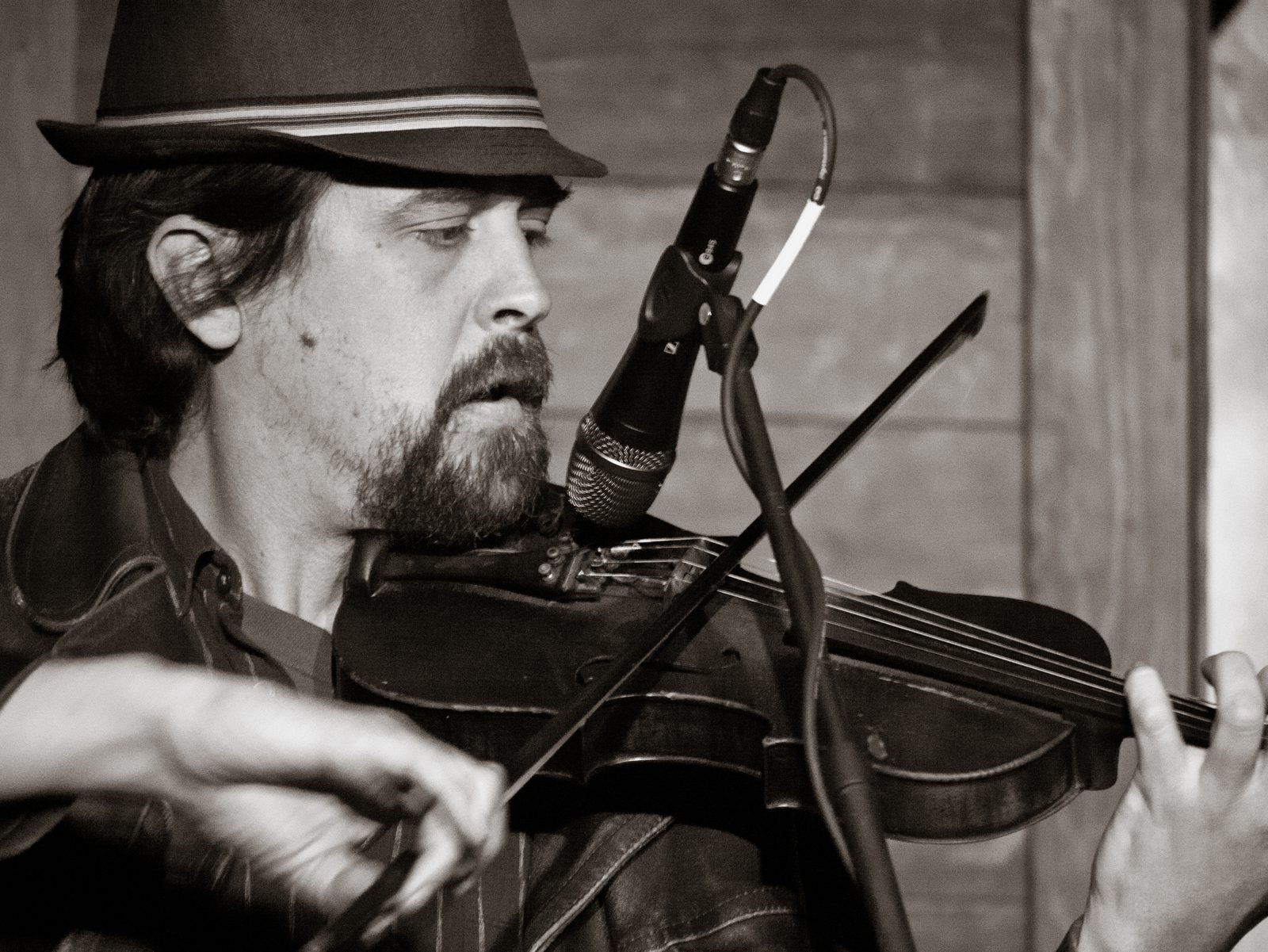
Dave Van Deventer of The Woodshedders playing at the Barns of Rose Hill in January 2012, in the photographer's description of his own picture. This shows the organization's work — a concert it put on — and not its building: no photograph of the barns themselves has been found under a license that permits republication. Photograph by Reed George, January 14, 2012, via Flickr and Wikimedia Commons. Licensed CC BY-SA 2.0.Rights and what was changed
Barns of Rose Hill
A community arts center in Berryville presenting live music, exhibitions, workshops, film screenings and art classes. It publishes a Berryville street address.
“Barns of Rose Hill is a 501(c)(3) nonprofit community arts center in historic Berryville, Virginia. Throughout the year, we offer a variety of programs for people of all ages, including live music, exhibitions, educational workshops, film screenings, art classes, community programs, and more.”— the organization’s own words, 2026-09-11
Where this comes from, and what it does not establish
Legal identity
Barns of Rose Hill is listed in the IRS Exempt Organizations Business Master File under EIN 27-0103521 as a 501(c)(3) organization, with a ruling year of 2004 recorded in the file.The IRS recognized this organization's tax-exempt status in 2004. That is the year of the determination as carried in this extract, and it is not necessarily the founding year: an organization can be recognized long after it began, and nothing here establishes when it was founded. Listing is not evidence that the organization is operating now, and this record establishes nothing about its conduct or its finances.
Filings located
Returns for Barns of Rose Hill are located in the filing index for 13 fiscal years, 2012 through 2024, on Form 990.Returns are listed for 13 fiscal years, 2012 through 2024, on Form 990. A listed return is one that can be located in the filing index, not one that has been read: no document was retrieved, no amount from any return is reported in this note, and a directory entry is not an audit. Years missing from that count are years these sources did not return, which is not evidence that nothing was filed; no source used here reports a prior-year 990-N.
Qualified: self-published address, county determined by geocoding
Barns of Rose Hill publishes a street address for its own premises that falls in Clarke County, Virginia.The address is the organization's own statement; no deed, lease or county record was inspected. Placing it in Clarke County is this project's determination, from a US Census Bureau geocoder address match confirmed by an FCC Area API county lookup of the coordinates that geocoder returned. That second step checks the county for those coordinates; it is not an independent geocode of the address, so it cannot catch an address the Census geocoder placed at the wrong point. The street address itself is not published here, and where the organization's work reaches was not measured.
Supported by the IRS register
The IRS classifies Barns of Rose Hill under Arts, Culture and Humanities.A broad category is not a description of programs.
Qualified: a dated newspaper report carrying the organization's figure
On 9 September 2026 the Winchester Star reported that Barns of Rose Hill had completed a decade-long campaign that raised $2 million to establish a permanent endowment.This endowment is not operating money. It is a permanent fund; the organization's own page says it invests for income and long-term growth and spends a portion of earnings each year on programs. Its executive director is quoted saying that annual gifts, memberships, sponsorships, grants and ticket revenue remain essential for the Barns to keep presenting programs and caring for its building. Nothing here states the fund's balance, its spending rate or its terms, and no return or financial statement was inspected.
Its own description
Self-published and unverified. This is the organization's account of its own work; nothing here checks it against a program record, a filing or an independent report.
Every statement above is one record on the evidence page→, with its own assessment.
Blue Ridge Wildlife Center
A wildlife hospital on Island Farm Lane in Boyce that treats injured and orphaned native animals free of charge, trains wildlife veterinarians and rehabilitators, and runs education programs in schools across the region. It publishes a Clarke County address for its own premises, on land it says a private foundation provides at no cost.
“BRWC provides veterinary services, educational programs, professional training, and actively contributes to scientific research on local wildlife diseases and environmental threats. Operating without government funding, the Center relies entirely on donations.”— the organization’s own words, 2026-09-11
Where this comes from, and what it does not establish
Legal identity
Blue Ridge Wildlife Center is recognized by the IRS as a 501(c)(3) organization, EIN 54-1996991, with tax exemption issued February 2001 and a Boyce, Virginia locality on the register.Read from ProPublica's Nonprofit Explorer, which is an interface onto IRS data rather than an independent observer; an error in the IRS record would appear there unchanged. An exemption date is not a founding date, and the locality on a federal register is a mailing locality, not a finding about where the work is done.
Qualified: the organization's own account, echoed in local reporting
The organization says it was established in 2000 and has grown from a wildlife assistance hotline into an 8,700 square foot facility; a Clarke Monthly feature in March 2025 described it the same way, as founded 25 years earlier and grown from a hotline into a wildlife hospital.Both statements trace to the organization. The feature attributes its framing to the center and cites no record, so it corroborates the telling rather than the founding. No incorporation record, charter or dated document was consulted, and the date the hotline became a hospital is not established by anything read here.
Qualified: two descriptions from the same organization, recorded as they stand
The organization describes its early work in two ways: its About page and a 2025 feature call the start a wildlife assistance hotline, and the introduction to its own 2025 annual report calls it a small education effort.Neither is checked against a record, and the two are not in conflict: answering calls about wildlife and teaching people about wildlife are the kind of work a small organization does at once, and nothing read here says whether these describe one activity or two. Recorded because both are published, not because either is disputed.
Qualified: reported figures, attributed in the article to the organization
Clarke Monthly reported in March 2025 that the center had served patients from 40 counties across four states and the District of Columbia in 2024, and that 172 species were patients that year. In the same account, without attaching a year, it gave a staff of 16 with 50 volunteers and a budget of about $1.5 million.The article attributes these figures to the executive director rather than to any record the reporter examined, and no filing was consulted. The year label matters: the article ties the counties, the states and the species count to 2024 and states the staff, volunteer and budget figures without a year, so they are carried here as reported in March 2025 rather than assigned to 2024.
Qualified: the organization's own annual report, as reported
The organization's 2025 annual report, as Royal Examiner reported it in April 2026, records 4,005 patients of 166 species, 49,686 hotline calls, ten research studies, 13 summer rehabilitation interns contributing more than 7,000 hours, and 78 programs and events reaching over 5,000 people.Every figure originates with the organization; the reporting establishes what the report says, not that anyone checked it. The annual report itself was not obtained. The organization's year-end message three months earlier gave a narrower measure for the same year, 62 educational programs reaching more than 3,500 people, against the annual report's 78 programs and events reaching over 5,000. Both are reported here with their own wording and date; the difference in what each counts is not resolved, and neither figure corrects the other.
Qualified: attributed to the organization's executive director
Ninety-nine percent of the injuries the center treats are caused by humans or domestic animals, and about 70 percent of its patients are released, according to its executive director as quoted in March 2025.Both figures are quoted from the executive director in a feature article. Neither is traced to the underlying patient records, and nothing here tests the definition behind either number - what counts as released, or over what period.
Qualified: the organization's own published rates, with its own denominator
For 2025 the organization published release rates measured only among patients that survived their first 24 hours of care: amphibians 82 percent, birds 58 percent, mammals 78 percent, reptiles 80 percent.These rates exclude any animal that died in the first day, which the organization states plainly and which is why they cannot be compared with a release rate measured on all admissions. Reported figures; the underlying records were not examined.
Qualified: the article's account, alongside the organization's own
Clarke Monthly reported in March 2025 that none of the center's money comes from state or federal funds, that it is not allowed to charge for its services, and that everything from diagnostics to surgery to rehabilitation is free. The organization's own About page says it operates without government funding and relies entirely on donations.The statement that the center may not charge is the reporter's sentence, not a citation of any rule, and no Virginia regulation was consulted here; it is carried as reported rather than as an established legal position. The funding statement appears both in the organization's own material and in reporting that draws on it.
Qualified: two reported cases and the organization's explanation of them
Lead poisoning is a recurring reason eagles arrive: one adult admitted in December 2024 had a blood lead level of 49, and another, treated for a shoulder fracture and lead toxicity together, was announced for release at Banshee Reeks Nature Preserve on March 29, 2025. The center attributes the exposure to ammunition fragments in gut piles and unrecovered deer, and radiographs donated venison year-round.Two cases are two cases, not a rate: nothing here establishes how much of the caseload lead accounts for. The clinical detail in both reports comes from the organization, in one case quoted from its own social media post. The mechanism it describes is its own account and was not checked against a study. The Banshee Reeks release was announced ahead of the date; nothing read here reports that it took place.
Qualified: reported from a visit, attributed to the organization
Education is carried by non-releasable animals kept as ambassadors, among them a wood turtle named Jesse who could not be returned to the wild because of an eye problem and because nobody knew where she had been found. Programs run in schools within an hour's drive under names including Wild Virginia, Wildlife in Winter, Turtle Takeover and World at Night.From one feature article whose author visited the center. The reason given for Jesse's non-release is the organization's, and no veterinary record was seen. The article's figure of nearly 12,000 people reached carries no year and is a third measure alongside the two the organization published for 2025; the three count different things, and no source read here sets out what each includes.
Qualified: attributed to the organization
The center is one of two wildlife veterinary teaching hospitals in Virginia, hosts one veterinary intern a year alongside a rehabilitation fellowship and paid summer internships with housing, and launched its first year-long veterinary, rehabilitation and education fellowships in 2025.The count of two teaching hospitals is the executive director's statement, repeated by the reporter; no register of Virginia teaching hospitals was consulted. The fellowship launch is from the organization's own year-end message.
Qualified: the organization's account, one publication named
The center describes its research as a One Health program, contributing data on avian influenza, COVID-19 in wild animals and tick-borne illness; a 2025 study of eastern cottontails as hosts for disease-carrying ticks was published in the Journal of Medical Entomology.The journal article was not retrieved or read, and its authorship, date and the organization's role in it are not established here - only that the annual report names it. The remaining research topics are the organization's description of its own work.
Qualified: the organization's own description of the arrangement
The center operates at 106 Island Farm Lane in Boyce, Clarke County, on land held under a Burwell-van Lennep Foundation conservation easement; the organization states the foundation provides the land at no cost.The land arrangement is the organization's characterization, not a record of title or tenure: no deed, lease or parcel record was inspected, and nothing here establishes who owns the land, who owns the building, or what instrument governs the use. Nor is the lessor's legal identity established; a shared surname is not evidence that two parties are one.
Qualified: one reported measure, from the organization's own 2025 report
Clarke County did not appear among the five counties that generated the most hotline calls in 2025; the organization's report names Loudoun, Frederick, Fairfax, Fauquier and Warren, in that order.This is a count of telephone calls, and it establishes nothing about where patients come from: no source read here reports patient origin by county, for Clarke or anywhere else. The separate patient measure in evidence is the 2024 figure of 40 counties across four states and the District of Columbia, which carries no county ranking. The five named counts also total a small fraction of the year's reported call volume, so the ranking and the total are not the same measure, and the source explains neither.
Qualified: an observation about the register entry, not about the organization
The IRS register files the organization under Philanthropy, Voluntarism and Grantmaking Foundations, a category that does not describe a wildlife hospital.An NTEE code is assigned in the federal register and is not the organization's description of itself. Why this one sits where it does was not determined: it may date from recognition, or be a keying error, or reflect something else. This is recorded as a property of the register entry and implies nothing about the organization's conduct or status.
Its own description
Self-published and unverified. This is the organization's account of its own work; nothing here checks it against a program record, a filing or an independent report.
Every statement above is one record on the evidence page→, with its own assessment.
Casey Trees
A Washington, DC organization that grows trees for the capital's tree canopy on a 730-acre farm along the Shenandoah River in Clarke County.
“Casey Trees [...] restore, enhance, and protect the tree canopy of our nation's capital. [On the Berryville farm:] a 730-acre farm along the Shenandoah River in Berryville, Virginia [which] produces approximately 7,000 trees annually with over 50,000 trees in inventory.”— the organization’s own words, 2026-09-11
Where this comes from, and what it does not establish
Legal identity
Casey Trees is listed as a 501(c)(3) organization under EIN 31-1766444, with an address of record in Washington, DC.Casey Trees is registered in the District of Columbia and is therefore ABSENT from the Virginia extract behind this project's inventory -- a documented limit of that universe, not a gap. Its address of record is its Washington headquarters, not the Clarke County farm. Listing is not evidence that the organization is currently operating, and this record establishes nothing about its conduct or its finances.
Qualified: the organization's own statement about a property
Casey Trees operates Casey Tree Farm, a 730-acre farm in Clarke County, Virginia, which grows trees for planting elsewhere.The headquarters is Washington and the service area is the tree canopy of Washington, DC and surrounding municipalities -- NEITHER is Clarke County. The local connection is the farm and nothing wider. No deed was inspected and the farm's acreage, output and ownership are the organization's own statements.
Its own description
Self-published and unverified. Nothing here checks it against a program record, a filing or an independent report.
Every statement above is one record on the evidence page→, with its own assessment.
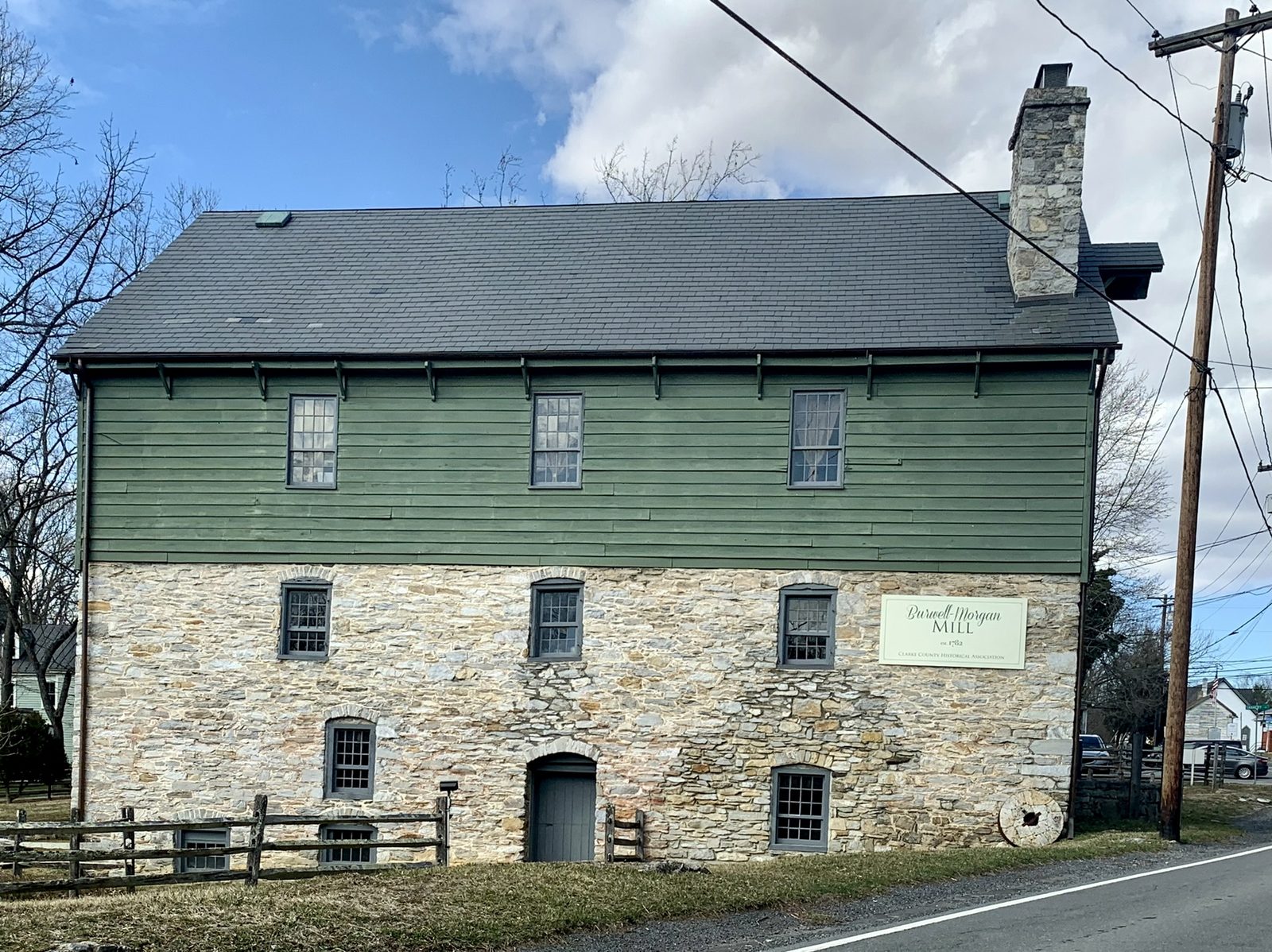
The Burwell-Morgan Mill at Millwood, photographed in 2022. The Clarke County Historical Association owns and operates the mill, and the board fixed to the stonework carries the association's name. Its history center and archive are at a separate address in Berryville and are not shown here. Photograph by Wikimedia Commons user APK, March 2, 2022. Licensed CC BY-SA 4.0.Rights and what was changed
Clarke County Historical Association
Keeps an archive of Clarke County records, photographs and newspapers for researchers, and runs a museum at what its own site calls its headquarters in Berryville. This site already cites its Proceedings as a source.
“In 2004, the Clarke County Historical Association began planning a new and exciting museum experience for visitors to our headquarters in Berryville.”— the organization’s own words, 2026-09-11
Where this comes from, and what it does not establish
Legal identity
Clarke County Historical Association is listed in the IRS Exempt Organizations Business Master File under EIN 54-6044234 as a 501(c)(3) organization, with a ruling year of 1963 recorded in the file.The IRS recognized this organization's tax-exempt status in 1963. That is the year of the determination as carried in this extract, and it is not necessarily the founding year: an organization can be recognized long after it began, and nothing here establishes when it was founded. Listing is not evidence that the organization is operating now, and this record establishes nothing about its conduct or its finances.
Filings located
Returns for Clarke County Historical Association are located in the filing index for 13 fiscal years, 2012 through 2024, on Form 990.Returns are listed for 13 fiscal years, 2012 through 2024, on Form 990. A listed return is one that can be located in the filing index, not one that has been read: no document was retrieved, no amount from any return is reported in this note, and a directory entry is not an audit. Years missing from that count are years these sources did not return, which is not evidence that nothing was filed; no source used here reports a prior-year 990-N.
Qualified: self-published address, county determined by geocoding
Clarke County Historical Association publishes a street address for its own premises that falls in Clarke County, Virginia.The address is the organization's own statement; no deed, lease or county record was inspected. Placing it in Clarke County is this project's determination, from a US Census Bureau geocoder address match confirmed by an FCC Area API county lookup of the coordinates that geocoder returned. That second step checks the county for those coordinates; it is not an independent geocode of the address, so it cannot catch an address the Census geocoder placed at the wrong point. The street address itself is not published here, and where the organization's work reaches was not measured.
Supported by the IRS register
The IRS extract records no mission classification for Clarke County Historical Association.An empty category field is an absence in the register, not a statement about the organization.
Supported by the cited volume
The Clarke County Historical Association publishes the Proceedings of the Clarke County Historical Association, a volume of which this site cites as a source.The cited volume establishes that the association published it; it says nothing about the association's current programs.
Its own description
Self-published and unverified. This is the organization's account of its own work; nothing here checks it against a program record, a filing or an independent report.
Every statement above is one record on the evidence page→, with its own assessment.
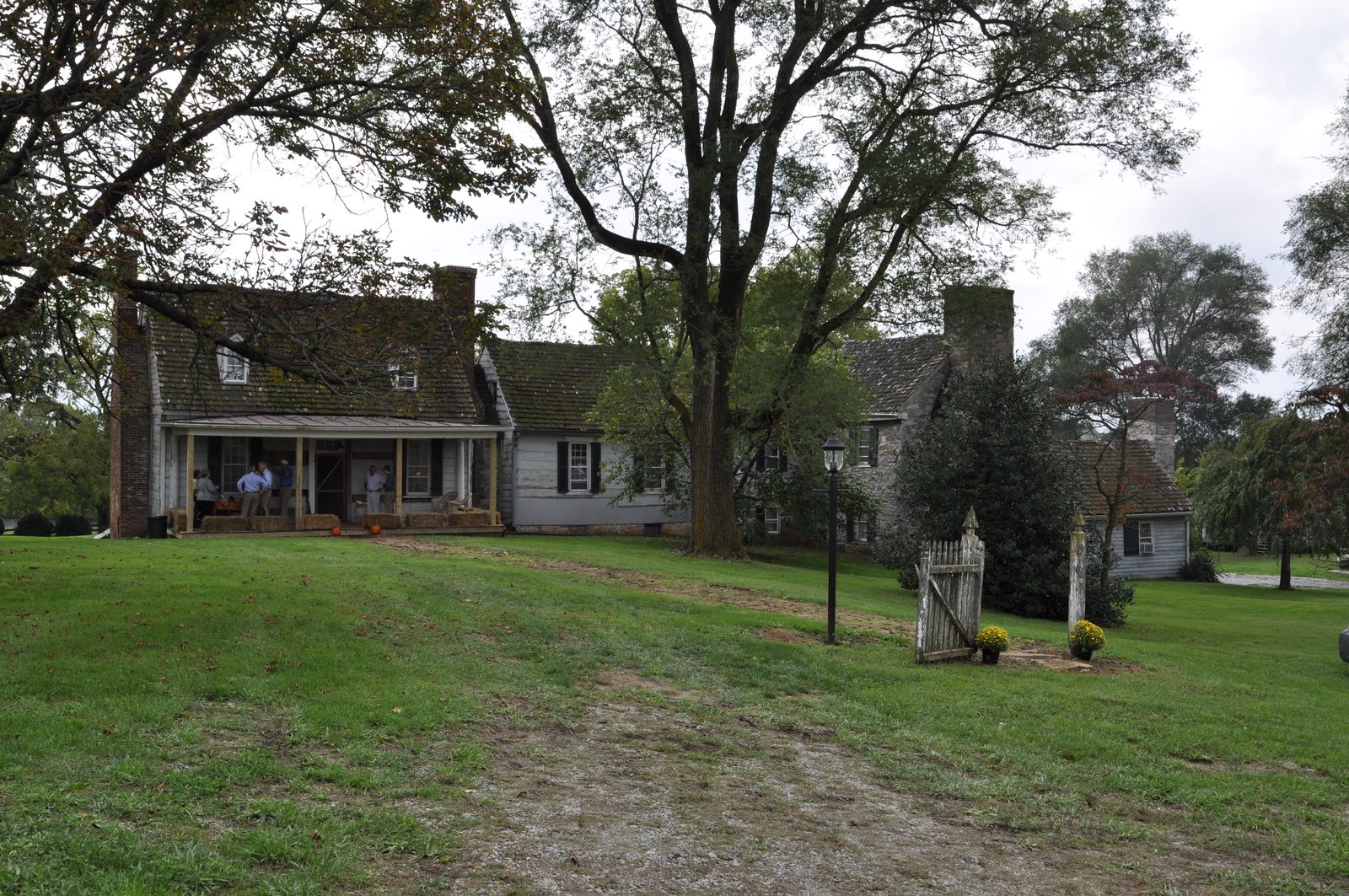
Clermont Farm on East Main Street in Berryville, photographed in 2011. The Clermont Foundation operates the farm; the land and buildings belong to the Commonwealth, through the Department of Historic Resources. The organization and the property are two separate records here, and this picture is of the property. Photograph by Betsy Fields, September 27, 2011, via Wikimedia Commons. Licensed CC BY-SA 3.0.Rights and what was changed
Clermont Foundation
Operates Clermont Farm, a 360-acre historic property in Clarke County, in partnership with the farm's owner, the Virginia Department of Historic Resources. Successor to the Clermont Charitable Trust.
“Clermont Farm is a historic, 360-acre property in Clarke County, Virginia, dedicated to education, preservation, and community enrichment. Operated by the Clermont Foundation in partnership with the farm's owner, the Virginia Department of Historic Resources.”— the organization’s own words, 2026-09-11
Where this comes from, and what it does not establish
Legal identity
Clermont Foundation is listed as a 501(c)(3) organization under EIN 27-3143754, with an address of record in Berryville, Virginia.The address of record is a filing address. The organization's Clarke connection rests on its own statement about the farm, not on this field. Listing is not evidence that the organization is currently operating, and this record establishes nothing about its conduct or its finances.
Qualified: the organization's own statement about a property
The Clermont Foundation operates Clermont Farm, which its own site places in Clarke County, Virginia.The inventory could not geocode this rural address: neither the US Census batch geocoder nor OpenStreetMap Nominatim returned a match, which is why the record sits in the provisional cohort at medium confidence. The farm's own site states the county in words. The scope document is explicit that a geocoder is a verification aid rather than the definition of locality, so this entry rests on the organization's own statement and says so. It is a DIFFERENT basis from the five, not a weaker version of the same one. Nothing here inspects a deed, a lease or the terms of the partnership.
Its own description
Self-published and unverified. Nothing here checks it against a program record, a filing or an independent report.
Every statement above is one record on the evidence page→, with its own assessment.
FISH of Clarke County
A volunteer-led food pantry and clothing ministry whose stated mission is that everyone in Clarke County can get food, clothing and support. It publishes a Berryville street address.
“Our mission is to make sure everyone in Clarke County has access to the food, clothing, and support they need.”— the organization’s own words, 2026-09-11
Where this comes from, and what it does not establish
Legal identity
FISH of Clarke County is listed in the IRS Exempt Organizations Business Master File under EIN 54-1554571 as a 501(c)(3) organization, with a ruling year of 1993 recorded in the file.The IRS recognized this organization's tax-exempt status in 1993. That is the year of the determination as carried in this extract, and the IRS ruling year does not establish its founding date: an organization can be recognized long after it began. FISH's own website dates its founding to 1968. Listing is not evidence that the organization is operating now, and this record establishes nothing about its conduct or its finances.
Filings located
Returns for FISH of Clarke County are located in the filing index for 12 fiscal years, 2012 through 2023, on Form 990 and Form 990-EZ.Returns are listed for 12 fiscal years, 2012 through 2023, on Form 990 and Form 990-EZ. A listed return is one that can be located in the filing index, not one that has been read: no document was retrieved, no amount from any return is reported in this note, and a directory entry is not an audit. Years missing from that count are years these sources did not return, which is not evidence that nothing was filed; no source used here reports a prior-year 990-N.
Qualified: self-published address, county determined by geocoding
FISH of Clarke County publishes a street address for its own premises that falls in Clarke County, Virginia.The address is the organization's own statement; no deed, lease or county record was inspected. Placing it in Clarke County is this project's determination, from a US Census Bureau geocoder address match confirmed by an FCC Area API county lookup of the coordinates that geocoder returned. That second step checks the county for those coordinates; it is not an independent geocode of the address, so it cannot catch an address the Census geocoder placed at the wrong point. The street address itself is not published here, and where the organization's work reaches was not measured.
Supported by the IRS register
The IRS classifies FISH of Clarke County under Human Services.A broad category is not a description of programs.
Its own description
Self-published and unverified. This is the organization's account of its own work; nothing here checks it against a program record, a filing or an independent report.
Every statement above is one record on the evidence page→, with its own assessment.
Shenandoah Valley Steam & Gas Engine Association
An association recognized by the IRS in Berryville; its own site could not be read for a description (a captcha refused every request). It publishes a Berryville street address.
No official link is published here: this organization’s site could not be read.
Where this comes from, and what it does not establish
Legal identity
Shenandoah Valley Steam & Gas Engine Association is listed in the IRS Exempt Organizations Business Master File under EIN 54-1534037 as a 501(c)(3) organization, with a ruling year of 1991 recorded in the file.The IRS recognized this organization's tax-exempt status in 1991. That is the year of the determination as carried in this extract, and it is not necessarily the founding year: an organization can be recognized long after it began, and nothing here establishes when it was founded. Listing is not evidence that the organization is operating now, and this record establishes nothing about its conduct or its finances.
Filings located
Returns for Shenandoah Valley Steam & Gas Engine Association are located in the filing index for 13 fiscal years, 2012 through 2024, on Form 990.Returns are listed for 13 fiscal years, 2012 through 2024, on Form 990. A listed return is one that can be located in the filing index, not one that has been read: no document was retrieved, no amount from any return is reported in this note, and a directory entry is not an audit. Years missing from that count are years these sources did not return, which is not evidence that nothing was filed; no source used here reports a prior-year 990-N.
Qualified: self-published address, county determined by geocoding
Shenandoah Valley Steam & Gas Engine Association publishes a street address for its own premises that falls in Clarke County, Virginia.The address is the organization's own statement; no deed, lease or county record was inspected. Placing it in Clarke County is this project's determination, from a US Census Bureau geocoder address match confirmed by an FCC Area API county lookup of the coordinates that geocoder returned. That second step checks the county for those coordinates; it is not an independent geocode of the address, so it cannot catch an address the Census geocoder placed at the wrong point. The street address itself is not published here, and where the organization's work reaches was not measured.
Supported by the IRS register
The IRS extract records no mission classification for Shenandoah Valley Steam & Gas Engine Association.An empty category field is an absence in the register, not a statement about the organization.
Every statement above is one record on the evidence page→, with its own assessment.
Reading the filing counts, and the list
A located filing is one that can be found, not one that has been read. Where an entry gives filing years, a return can be found in an index for those years; no document was retrieved and no figure from any return appears on this page. The one page here that reads returns line by line is the fire company comparison ↗, covering three organizations, none of them listed here.
The register behind this list is the IRS list of organizations recognized as exempt in Virginia, so absence from this page means nothing at all: churches and their integrated auxiliaries need not apply for recognition, small unincorporated associations often never appear, and an organization registered in another state is outside it entirely — one entry here was found that way.