Place

White Post

Clarke County community. Named in the People's Journal's 1924 roster as having a school taught by a Miss Mitchell, in the Clarke Courier's 1925 list as White Post Colored with Estelle Mitchell and Margaretta Richarson, and in the People's Journal's 1927 League committee as having its own representative.

No coordinates or district boundaries have been assigned, so this place is not placed on a map.
A Clarke community with its own Black school in the 1925 Courier roster

White Post

The Clarke County community in the western part of the county. Named in the Clarke Courier's 9 July 1925 teacher list as having one of seven Black schools in Clarke County.

The Clarke Courier's teacher assignment list of 9 July 1925 names seven Black schools in Clarke County — Stone Bridge, Boyce, Millwood, White Post, Josephine, Louisville and Bristol — with thirteen named teachers between them1. White Post is one of the seven; the community itself takes its name from an eighteenth-century marker post, and its status as one of Clarke's named villages runs back to before the county's own 1836 formation.

One claim establishes White Post's inclusion in the 1925 Black-schools roster. The community's eighteenth-century founding, its named post itself, and its dedicated Black school (a promotion-ready register candidate) are the natural next targets.

Evidence

See the source and its limits
✓ Supported by a sourceAn account exists

The Clarke Courier's teacher assignment list of 9 July 1925 names seven Black schools in Clarke County -- Stone Bridge, Boyce, Millwood, White Post, Josephine, Louisville and Bristol -- with thirteen named teachers between them.

What the source supports

A county-wide list of Black schools operating in the 1925-26 school year, published by the white county paper, which extends the school map the People's Journal rosters of 1912 and 1924 provide and which names Millwood Colored as having a principal and two assistants.

Uncertainty

The quoted passage is the tail of a longer county list, so it establishes which Black schools the list names and not that these were all of them. The Courier's 'Bristol colored' and the People's Journal's 'Bristow' are similar but their identity is NOT established here and no entity merges them. The Louisville teacher differs between the two papers -- Pattie Smith in October 1924, Emma E. Alexander in July 1925 -- which may be a change of teacher, a different school year, or incomplete reporting; nothing here decides. No coordinates, buildings, or races of individuals are inferred beyond the source's own 'colored' designations.

Source

Reporting

Evidence role: supports. The colored-schools portion of the 9 July 1925 teacher assignment list.

Clarke Courier, Berryville, Va., 9 July 1925

Clarke Courier · 1925-07-09 (publication)

Locator: Printed page 1, teacher assignment list, colored schools

Relevant passage
Stone Bridge colored -- Ella F. Carter. Boyce Colored -- Alma Layton and Matilda Herbert. Millwood Colored -- J. P Rier, Prin., Louise Bannister and Clarissa Layton. White Post Colored -- Estelle Mitchell and Margaretta Richarson. Josephine colored school -- E T. Johnson, Fannie Jenkins, Florine Johnson. Louisville colored -- Emma E. Alexander. Bristol colored -- George W. Carter.

Checked: Existing OCR reviewed. Original image not independently inspected.

Open source

Source family: clarke-courier. Multiple passages from one source are not independent witnesses.

AI-assisted source check (Claude Opus 5) · 2026-09-08. How this project checks its sources

What the sources support

The Clarke Courier's teacher assignment list of 9 July 1925 names seven Black schools in Clarke County -- Stone Bridge, Boyce, Millwood, White Post, Josephine, Louisville and Bristol -- with thirteen named teachers between them.

✓ Supported by a source
See the source and its limits
✓ Supported by a sourceAn account exists

The Clarke Courier's teacher assignment list of 9 July 1925 names seven Black schools in Clarke County -- Stone Bridge, Boyce, Millwood, White Post, Josephine, Louisville and Bristol -- with thirteen named teachers between them.

What the source supports

A county-wide list of Black schools operating in the 1925-26 school year, published by the white county paper, which extends the school map the People's Journal rosters of 1912 and 1924 provide and which names Millwood Colored as having a principal and two assistants.

Uncertainty

The quoted passage is the tail of a longer county list, so it establishes which Black schools the list names and not that these were all of them. The Courier's 'Bristol colored' and the People's Journal's 'Bristow' are similar but their identity is NOT established here and no entity merges them. The Louisville teacher differs between the two papers -- Pattie Smith in October 1924, Emma E. Alexander in July 1925 -- which may be a change of teacher, a different school year, or incomplete reporting; nothing here decides. No coordinates, buildings, or races of individuals are inferred beyond the source's own 'colored' designations.

Source

Reporting

Evidence role: supports. The colored-schools portion of the 9 July 1925 teacher assignment list.

Clarke Courier, Berryville, Va., 9 July 1925

Clarke Courier · 1925-07-09 (publication)

Locator: Printed page 1, teacher assignment list, colored schools

Relevant passage
Stone Bridge colored -- Ella F. Carter. Boyce Colored -- Alma Layton and Matilda Herbert. Millwood Colored -- J. P Rier, Prin., Louise Bannister and Clarissa Layton. White Post Colored -- Estelle Mitchell and Margaretta Richarson. Josephine colored school -- E T. Johnson, Fannie Jenkins, Florine Johnson. Louisville colored -- Emma E. Alexander. Bristol colored -- George W. Carter.

Checked: Existing OCR reviewed. Original image not independently inspected.

Open source

Source family: clarke-courier. Multiple passages from one source are not independent witnesses.

AI-assisted source check (Claude Opus 5) · 2026-09-08. How this project checks its sources

Know something about this place or record? Help fill a gap. It stays private until it is reviewed.

Keep exploring

Related stories

Working Clarke✓ Supported

Bellview and the Sprints

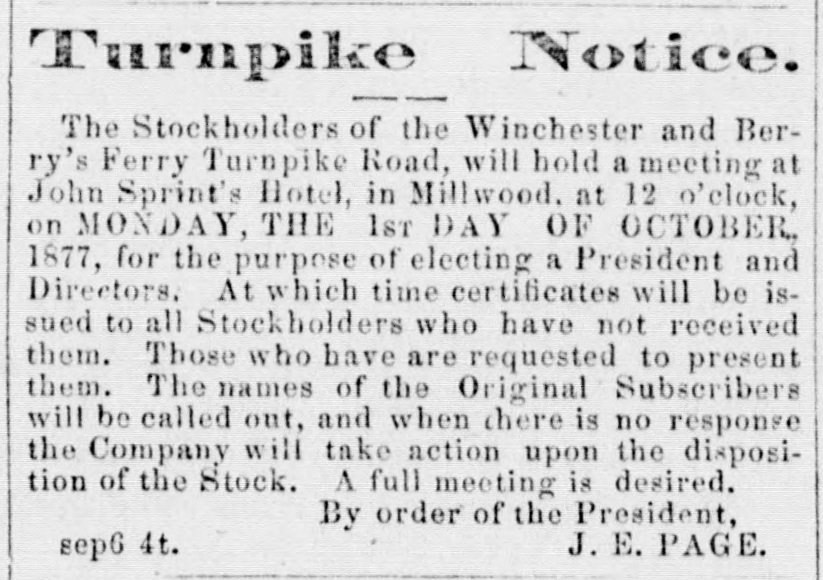
In 1877 a turnpike company called its stockholders to meet at John Sprint's Hotel in Millwood, and by 1882 J. W. Sprint & Son was advertising phosphates at Boyce. A will B. F. Humston signed in 1902 provided the Bellview farm to his daughter, Mamie R. Sprint, for life; it was admitted to record in 1904. Her son J. Ashby Sprint acquired orchard property, exported apples and leased land under a packing house at White Post. The records trace Mamie's family and Ashby's trade, while leaving the hotel's John Sprint and the firm's partners incompletely identified.

What the evidence says Humston's recorded will gives Mamie R. Sprint the Bellview farm for life. Courier notices place a Sprint packing house at Boyce and a leased packing-house site at White Post, but none names who ran the Boyce house, and the 1936 sale was advertised, not shown to be completed.

  • 5 min read
  • 21 sources
Civic life & gathering✓ Supported

Clarke's home front: watching the sky and making do

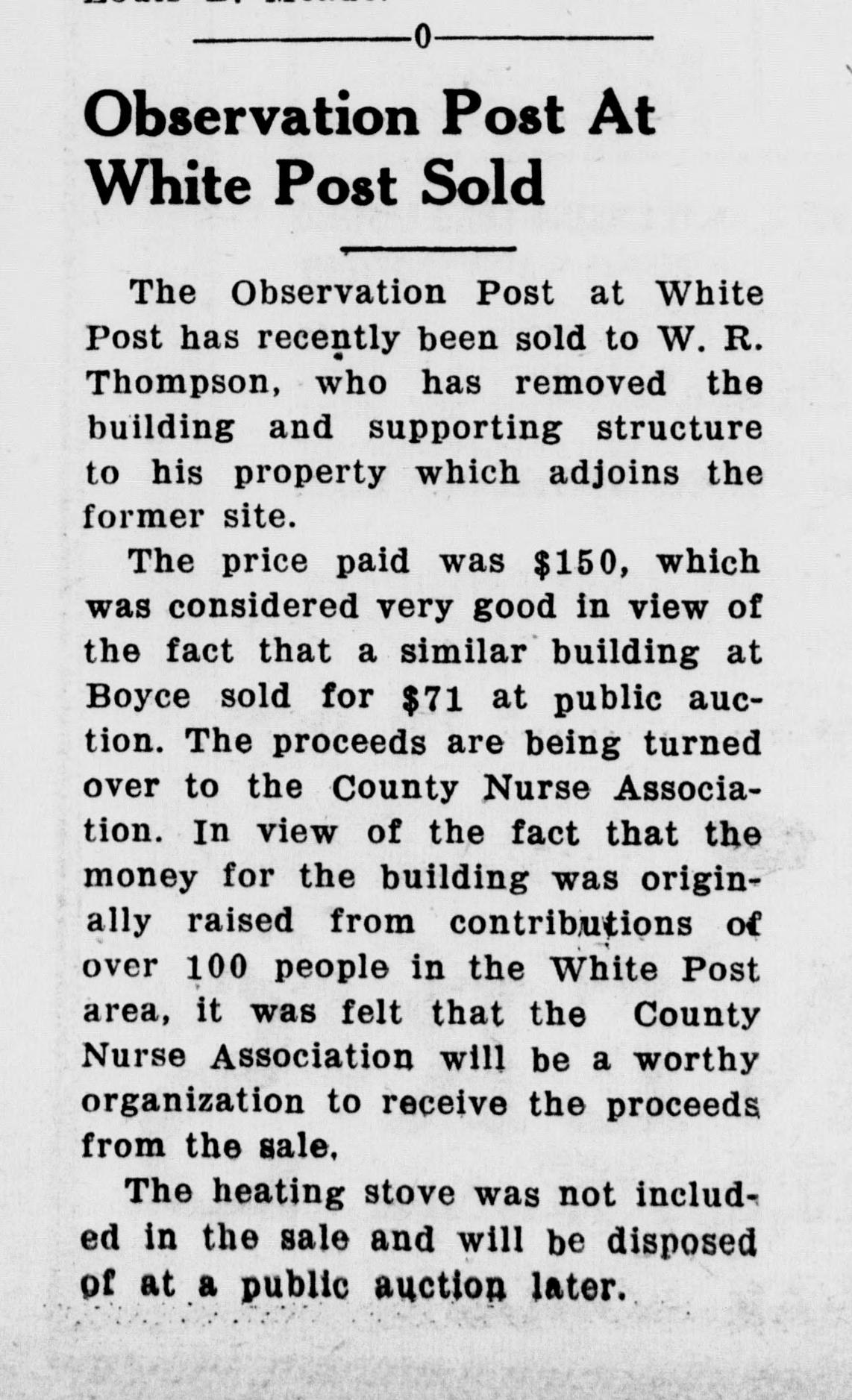
In June 1941, six months before Pearl Harbor, the Clarke Courier reported volunteers organizing aircraft observation posts across the county. Over the next two years it recorded tire and gasoline rationing reshaping that watch, schoolhouses serving as registration offices for sugar and gasoline, neighbors building and dedicating posts of their own, and the posts' closing by War Department order in July 1943.

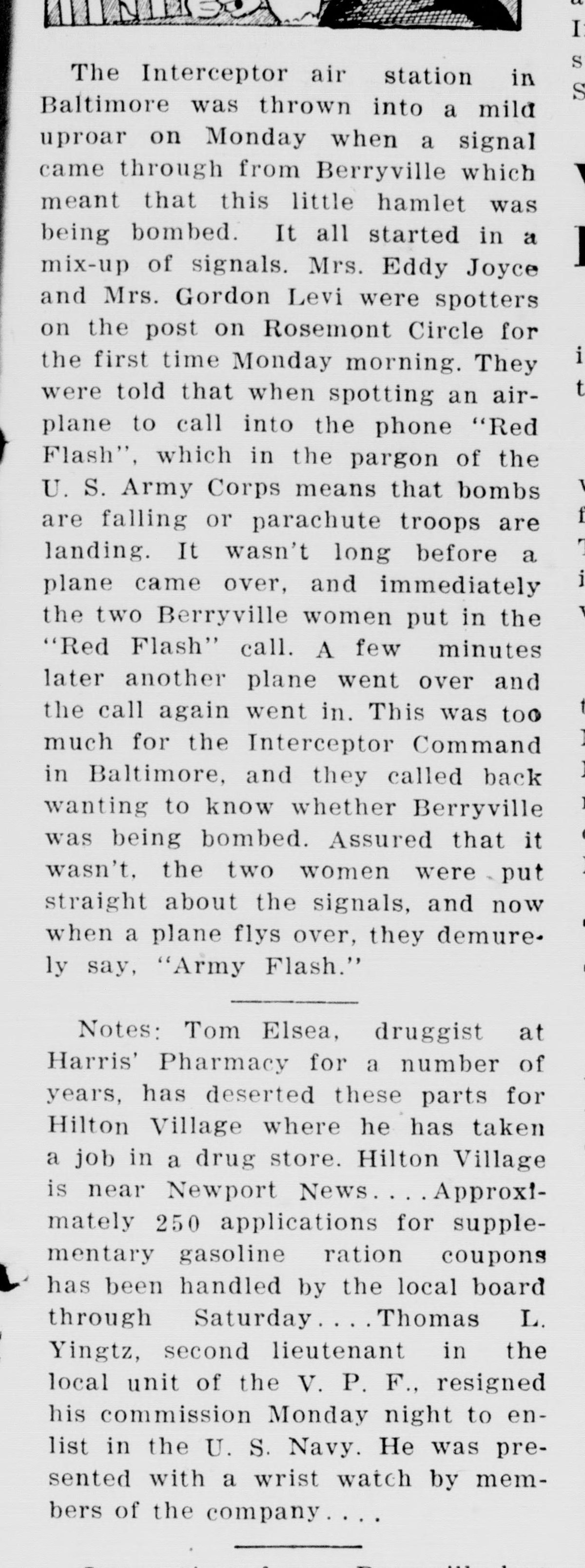
What the evidence says Courier reports and notices from June 1941 to August 1945, each read on a Library of Congress page image, document the county's aircraft warning posts, the tire board, the sugar and gasoline registrations, the posts' closing and the Boyce station's sale. They do not corroborate the column's "Red Flash" story, give a final sugar count or show who bought the Boyce station.

  • 7 min read
  • 18 sources
Civic life & gathering✓ Supported

Dear Dan: Clarke's home front, 1943–1945

For more than three years the Clarke Courier wrote a weekly "Dear Dan" letter to a man overseas. Its pages from 1943 to 1945 show volunteers stretched thin at the aircraft spotter posts, a harvest brought in by boys, school children, traveling crews, convicts and prisoners of war, the Pope family's long wait for a son held by Japan, and a town that celebrated victory twice.

What the evidence says Clarke Courier columns, editorials, reports and notices from 1943 to 1945, each read on a Library of Congress page image, document the spotter posts' shortage of volunteers, the 1944 harvest labor as the county agent reported it, the Pope family's news of a son held by Japan, and the town's two victory celebrations.

  • 10 min read
  • 32 sources
Service & war✓ Supported

Held in the North: Clarke men in Union prisons

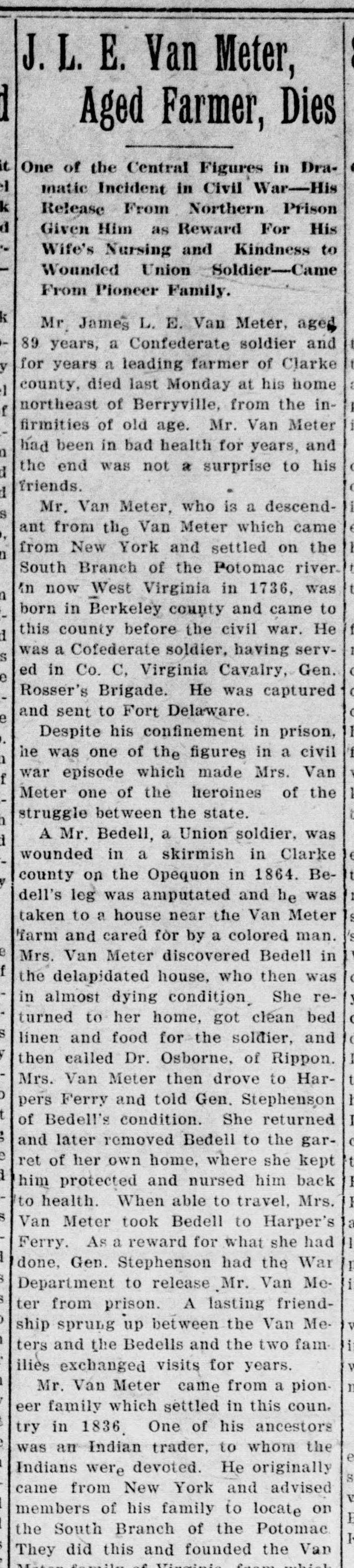
Many Clarke men spent part of the war in Northern prison camps. Their death notices in the Clarke Courier, written decades later, kept their stories: a fifteen-year-old cavalryman held five months at Fort Delaware, a color-bearer who traded his whiskey ration for bread at Elmira and swam a river to get home, and a farmer released because his wife had nursed a wounded Union soldier back to health in her garret.

What the evidence says Eight Clarke Courier notices and letters of 1900 to 1923, read on the Library of Congress page images, tell what the county remembered of its Confederate soldiers held in Northern prisons.

  • 6 min read
  • 8 sources
Service & war✓ Supported

Wounded: five Clarke soldiers and what they carried home

Five Clarke County Confederate soldiers came home wounded, and their death notices in the Clarke Courier still remembered it decades later: a man hit at the first battle of Manassas who never fully recovered, a cavalryman crippled in the arm on the same day, and wounds from Kernstown, Brandy Station and Gettysburg.

What the evidence says Five Clarke Courier death notices of 1899 to 1914, read on the Library of Congress page images, name the battle where each man was wounded and what the wound cost him.

  • 4 min read
  • 5 sources

Search

Searches the released collection only.